Food & safety
What is the range of food hygiene ratings?
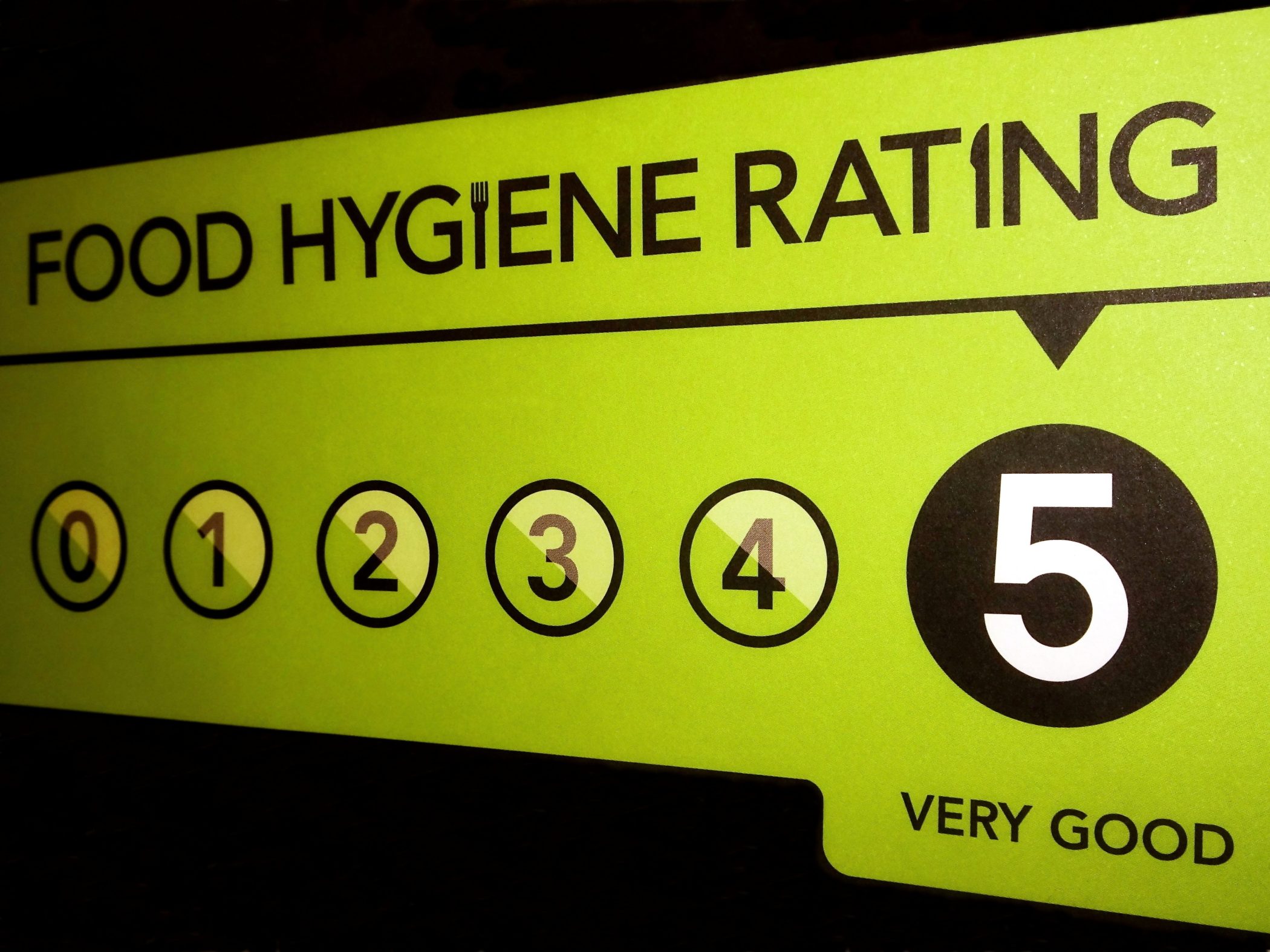

A food hygiene rating, also known as the ‘scores on the doors’, is a rating system that assesses and logs the food safety of a food business. Any business which "sells, cooks, stores, handles, prepares or distributes" food may be considered a food business.
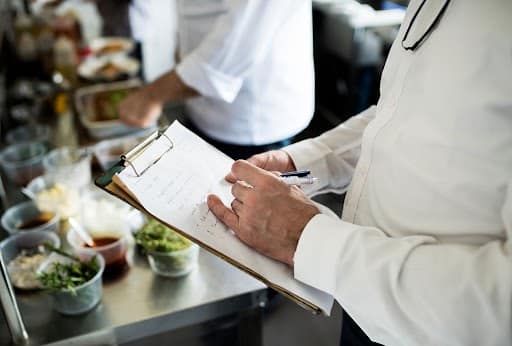
As part of registering as a food business, you will be required to register with your local authority. This local authority is responsible for ensuring your food hygiene standards are up to scratch. Approximately every 2 years, you will receive a visit from an Environmental Health Officer (EHO). This is an inspector who will look at your premises, speak with your staff, and read through your paperwork to assess your food hygiene standard. These visits can be unannounced, so it is important your standards are always high.
Food hygiene ratings range between 0 and 5, with 0 being the worst and 5 the best. Businesses with low food hygiene ratings are at serious risk of being shut down by the EHO. It is also a sign to potential customers of how safely you operate. In Wales and Northern Ireland, it is necessary to display your food hygiene rating in a prominent location, whilst in England and Wales, it is highly recommended. Every business’s food hygiene rating is also stored in a public database, allowing anyone to check it before visiting your business. This means that it is in your interest as a business to strive for that level 5 rating.
There are three categories against which the inspector will mark you, with each one weighted equally. They are premises, food handling processes, and confidence in leadership.
Your premises are the physical spaces you work in. This includes the layout of your food preparation area, cleanliness, and property condition. It also includes your pest control. An EHO will check for signs of pests, as well as a system in place to prevent them.
Your food handling processes are the ways you actually interact with the food you prepare. Inspectors will make sure, amongst other things, that your food is kept out of the danger zone, is prepared safely, and that there is no cross-contamination.
Confidence in management refers to how much the EHO trusts the processes you have in place. As an inspection is only a snapshot of your food business, they will seek evidence that you and your team are committed to maintaining high food hygiene standards. Evidence such as a food safety management system, staff training records, and logged checks of storage temperatures can all be taken into account. They may also want to talk to your team, to check their understanding of and commitment to safe practices.
The EHO will give each of these three areas a score. In this case, the lower the score, the better. Premises and food handling processes are scored out of 25. Confidence in management is scored out of 30. Each of the three scores is given in intervals of 5. The EHO is looking for consistency, so you need to achieve low scores in all three categories to earn the top food hygiene ratings.
To achieve a 5, your combined total must be between 0 and 15, with at most a 5 in any given section. A four or three requires at most 10 points in any section, with 20 points the total cap for a four and between 25 and 30 the cap for a three. If any individual score reaches 15, the most you can achieve is a 2, and your total must be between 35 and 40. A 1 is given to any score between 45 and 50, or to a business reaching 20 in an individual area, and any score above 50 will result in a food hygiene rating of 0. You will receive your score alongside written feedback either straight after the inspection or within 14 days.
Your inspection scores will be combined to create your overall food hygiene rating. These range from 0-5:
| Rating | Title | What it means for your business |
| 5 | Very Good | Full compliance with food safety laws; excellent management |
| 4 | Good | High standards, minor improvements needed in non-critical areas |
| 3 | Satisfactory | Generally compliant but needs better proactive management. |
| 2 | Improvement necessary | Hazards exist; poor cleanliness or outdated training found |
| 1 | Major improvement | Serious safety breaches; high risk of cross-contamination. |
| 0 | Urgent improvement | Critical failure; risk to public health; business may be closed. |
If your food hygiene rating isn't perfect, don't worry. EHO inspectors aren't looking for reasons to shut you down; they are there to help you. The first thing you should do after receiving your rating is read the feedback given by the EHO. This will be detailed feedback, which will tell you what went wrong and how to improve. As EHOs are experts in food safety, their recommendations will be very useful in improving for your next inspection.
Your inspection may also make you realise that you have gaps in your knowledge of food safety. It is recommended that you and your staff renew your food hygiene training every 2 years. This will keep food safety fresh in everyone's minds, as well as keeping you up-to-date with the latest legislation. You may be being assessed on something which didn't exist when you undertook your training. For more information about our Level 2 food hygiene course, click here. And if you would like more guidance on achieving a 5-star rating on your inspection, check out our free "How to get a five food hygiene rating" course.
If your food hygiene rating is high, that’s great news! Food businesses with high food hygiene ratings are deemed lower risk. This means you will probably have a couple of years before your next inspection. Make sure you keep up your food hygiene standards in between inspections. You will also be able to proudly display your food hygiene rating in your business. Good food hygiene is important to customers, and this allows you to build trust with them.
If your food hygiene rating is lower, it means that your hygiene is not up to scratch. Alongside the food hygiene rating, the EHO will provide you with detailed feedback about what didn’t meet the required standard and how to improve. They may also serve a formal legal notice setting out things you must or must not do. Most of the time, you will be given time to address these issues. If your rating is especially low however, the EHO can make the decision to temporarily close your food business until you can demonstrate you have brought your food hygiene standards back up. Your business will also be considered higher risk. This means inspections will occur more often. Finally, imagine seeing a restaurant with a low food hygiene rating. Would you want to go and eat there? Low food hygiene ratings put off customers, causing lower sales.
Is a food hygiene rating of 3 good?
A rating of 3 is classified as "Generally Satisfactory." While this means your business is broadly compliant with food safety laws, it indicates there is room for improvement. In a competitive market, a 3 can often deter customers who specifically look for a 4 or 5.
Do I have to display my food hygiene rating by law?
In Wales and Northern Ireland, displaying your rating sticker is a legal requirement. In England, it is currently voluntary but highly recommended. However, as of 2026, the FSA is actively moving toward making mandatory display the national standard in England to increase transparency and consumer trust.
What is the Confidence in Management score?
This is one of the three pillars an EHO uses to determine your rating. It assesses how well a business manages food safety daily. A key way to score highly here is by maintaining an up-to-date HACCP plan and ensuring all staff have current Food Hygiene Certificates.
How long does a food hygiene rating last?
Your rating stays in place until your next inspection. For high-risk businesses like restaurants, this is usually every 6-12 months. For lower-risk businesses, it can be every 2 years. If you receive a low score, you can apply for a re-visit for a fee once you have corrected the issues.
Can a business be closed if it gets a 0 rating?
A rating of 0 ("Urgent Improvement Necessary") does not automatically mean a business will be closed, but it signals serious safety breaches. If the EHO finds an imminent risk to health, such as a pest infestation or lack of running water, they can issue a Hygiene Emergency Prohibition Notice to close the premises immediately.
A food hygiene rating, also known as the ‘scores on the doors’, is a rating system that assesses and logs the food safety of a food business. Any business which "sells, cooks, stores, handles, prepares or distributes" food may be considered a food business.
As part of registering as a food business, you will be required to register with your local authority. This local authority is responsible for ensuring your food hygiene standards are up to scratch. Approximately every 2 years, you will receive a visit from an Environmental Health Officer (EHO). This is an inspector who will look at your premises, speak with your staff, and read through your paperwork to assess your food hygiene standard. These visits can be unannounced, so it is important your standards are always high.
Food hygiene ratings range between 0 and 5, with 0 being the worst and 5 the best. Businesses with low food hygiene ratings are at serious risk of being shut down by the EHO. It is also a sign to potential customers of how safely you operate. In Wales and Northern Ireland, it is necessary to display your food hygiene rating in a prominent location, whilst in England and Wales, it is highly recommended. Every business’s food hygiene rating is also stored in a public database, allowing anyone to check it before visiting your business. This means that it is in your interest as a business to strive for that level 5 rating.
There are three categories against which the inspector will mark you, with each one weighted equally. They are premises, food handling processes, and confidence in leadership.
Your premises are the physical spaces you work in. This includes the layout of your food preparation area, cleanliness, and property condition. It also includes your pest control. An EHO will check for signs of pests, as well as a system in place to prevent them.
Your food handling processes are the ways you actually interact with the food you prepare. Inspectors will make sure, amongst other things, that your food is kept out of the danger zone, is prepared safely, and that there is no cross-contamination.
Confidence in management refers to how much the EHO trusts the processes you have in place. As an inspection is only a snapshot of your food business, they will seek evidence that you and your team are committed to maintaining high food hygiene standards. Evidence such as a food safety management system, staff training records, and logged checks of storage temperatures can all be taken into account. They may also want to talk to your team, to check their understanding of and commitment to safe practices.
The EHO will give each of these three areas a score. In this case, the lower the score, the better. Premises and food handling processes are scored out of 25. Confidence in management is scored out of 30. Each of the three scores is given in intervals of 5. The EHO is looking for consistency, so you need to achieve low scores in all three categories to earn the top food hygiene ratings.
To achieve a 5, your combined total must be between 0 and 15, with at most a 5 in any given section. A four or three requires at most 10 points in any section, with 20 points the total cap for a four and between 25 and 30 the cap for a three. If any individual score reaches 15, the most you can achieve is a 2, and your total must be between 35 and 40. A 1 is given to any score between 45 and 50, or to a business reaching 20 in an individual area, and any score above 50 will result in a food hygiene rating of 0. You will receive your score alongside written feedback either straight after the inspection or within 14 days.
Your inspection scores will be combined to create your overall food hygiene rating. These range from 0-5:
| Rating | Title | What it means for your business |
| 5 | Very Good | Full compliance with food safety laws; excellent management |
| 4 | Good | High standards, minor improvements needed in non-critical areas |
| 3 | Satisfactory | Generally compliant but needs better proactive management. |
| 2 | Improvement necessary | Hazards exist; poor cleanliness or outdated training found |
| 1 | Major improvement | Serious safety breaches; high risk of cross-contamination. |
| 0 | Urgent improvement | Critical failure; risk to public health; business may be closed. |
If your food hygiene rating isn't perfect, don't worry. EHO inspectors aren't looking for reasons to shut you down; they are there to help you. The first thing you should do after receiving your rating is read the feedback given by the EHO. This will be detailed feedback, which will tell you what went wrong and how to improve. As EHOs are experts in food safety, their recommendations will be very useful in improving for your next inspection.
Your inspection may also make you realise that you have gaps in your knowledge of food safety. It is recommended that you and your staff renew your food hygiene training every 2 years. This will keep food safety fresh in everyone's minds, as well as keeping you up-to-date with the latest legislation. You may be being assessed on something which didn't exist when you undertook your training. For more information about our Level 2 food hygiene course, click here. And if you would like more guidance on achieving a 5-star rating on your inspection, check out our free "How to get a five food hygiene rating" course.
If your food hygiene rating is high, that’s great news! Food businesses with high food hygiene ratings are deemed lower risk. This means you will probably have a couple of years before your next inspection. Make sure you keep up your food hygiene standards in between inspections. You will also be able to proudly display your food hygiene rating in your business. Good food hygiene is important to customers, and this allows you to build trust with them.
If your food hygiene rating is lower, it means that your hygiene is not up to scratch. Alongside the food hygiene rating, the EHO will provide you with detailed feedback about what didn’t meet the required standard and how to improve. They may also serve a formal legal notice setting out things you must or must not do. Most of the time, you will be given time to address these issues. If your rating is especially low however, the EHO can make the decision to temporarily close your food business until you can demonstrate you have brought your food hygiene standards back up. Your business will also be considered higher risk. This means inspections will occur more often. Finally, imagine seeing a restaurant with a low food hygiene rating. Would you want to go and eat there? Low food hygiene ratings put off customers, causing lower sales.
Is a food hygiene rating of 3 good?
A rating of 3 is classified as "Generally Satisfactory." While this means your business is broadly compliant with food safety laws, it indicates there is room for improvement. In a competitive market, a 3 can often deter customers who specifically look for a 4 or 5.
Do I have to display my food hygiene rating by law?
In Wales and Northern Ireland, displaying your rating sticker is a legal requirement. In England, it is currently voluntary but highly recommended. However, as of 2026, the FSA is actively moving toward making mandatory display the national standard in England to increase transparency and consumer trust.
What is the Confidence in Management score?
This is one of the three pillars an EHO uses to determine your rating. It assesses how well a business manages food safety daily. A key way to score highly here is by maintaining an up-to-date HACCP plan and ensuring all staff have current Food Hygiene Certificates.
How long does a food hygiene rating last?
Your rating stays in place until your next inspection. For high-risk businesses like restaurants, this is usually every 6-12 months. For lower-risk businesses, it can be every 2 years. If you receive a low score, you can apply for a re-visit for a fee once you have corrected the issues.
Can a business be closed if it gets a 0 rating?
A rating of 0 ("Urgent Improvement Necessary") does not automatically mean a business will be closed, but it signals serious safety breaches. If the EHO finds an imminent risk to health, such as a pest infestation or lack of running water, they can issue a Hygiene Emergency Prohibition Notice to close the premises immediately.
Join 950,000+ learners
Explore our award winning online video based training
The Safer Food Group
Unit 2, Integrity House,
Lower Lumsdale, Matlock
DE4 5EX

Back
to top
© The Safer Food Group 2026 | Privacy policy