Food & safety
Understanding Allergens and Cross-Reactivity



Navigating food safety involves more than just following a checklist. While standard procedures protect most people, there are biological complexities - like cross-reactivity - that are impossible to control via conventional processes. This guide recaps the basics of allergens and then examines a more challenging element that is an emerging concern for food businesses.
Allergens are proteins found in certain foods that cause the immune system to overreact. For most people, these proteins are harmless. However, for someone with a food allergy, the body identifies the protein as a threat and releases chemicals like histamine to "fight" it. This results in an allergic reaction, which can range from mild itching or hives to life-threatening anaphylaxis.
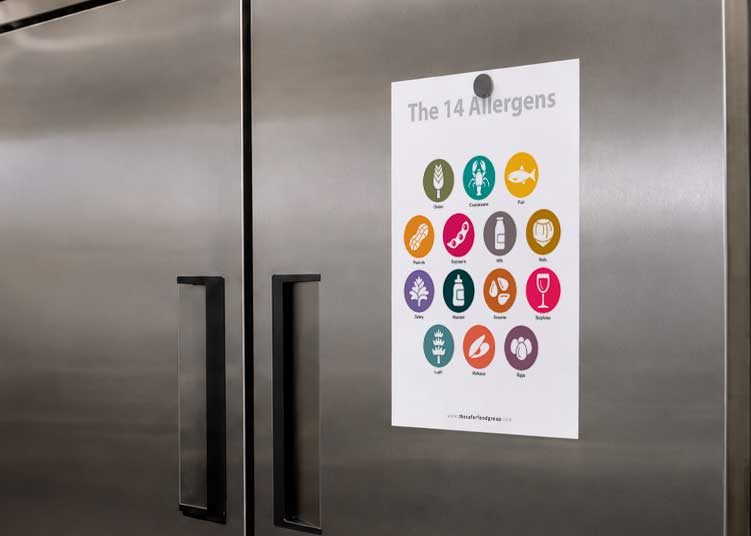
In the UK, food law identifies 14 specific allergens that must be clearly highlighted on food labels or menus:
Important Note: These lists are not universal. Outside the UK, listed allergens may differ: for example, there are only 9 listed allergens in America. People with allergies need to be aware when travelling or reading labels from imported foods, as a normally "safe" product abroad may contain ingredients not highlighted as allergens.
As a minimum, food businesses are required to give customers information about the presence of the 14 listed allergens within their foods. The method of communicating these allergens depends on the type of business, how the customer places an order and the way the food is served to the customer.
In order to provide clarity for allergy sufferers, food businesses should have some form of allergy policy that states their position on allergen management. Some employ systems and processes that allow them to offer food that is safe for allergy sufferers. In order to achieve this, they typically employ strict Allergen Management Systems, including:
Cross-reactivity occurs when the body reacts to a food because its proteins are biologically similar to something else the person is already allergic to. The body "mistakes" one protein for another. This is not a labelling error or a case of cross-contamination; it is a biological reaction to a correctly prepared ingredient.
Common patterns of cross-reactivity include:
Want to know more about specific cross-reactive foods? Food Allergy Aware have a great factsheet with more information and lots more support for people with allergies.
The biggest challenge is that cross-reactivity sits outside the standard system. A dish can be 100% compliant with the law, correctly prepared, and accurately described, yet still cause a reaction.
Because cross-reactivity varies significantly between individuals, it cannot be reliably predicted by a food business catering for a general population. Even when a business does everything right, a risk may still exist. This means safe practice is not just about following rules, but about recognising the limits of the system.
While you cannot eliminate the biological risk of cross-reactivity, you can manage it through better information and consistency. In a food business that operates a strict allergen management process, a lot of the bases will already be covered, but these are the key steps to look out for:
By being transparent and consistent, food businesses can help customers make informed and confident choices about their own specific sensitivities.
Want to get allergy management right in your food business? The Safer Food Group offers two training courses - Level 2 Allergy Awareness is perfect for food handlers as it explains the basic science of allergies and intolerances and looks at the practical, everyday steps required to produce safe food. Level 3 Allergy Management takes a deeper dive into the science and helps the food business leader risk assess, create and implement a comprehensive allergy process.
Navigating food safety involves more than just following a checklist. While standard procedures protect most people, there are biological complexities - like cross-reactivity - that are impossible to control via conventional processes. This guide recaps the basics of allergens and then examines a more challenging element that is an emerging concern for food businesses.
Allergens are proteins found in certain foods that cause the immune system to overreact. For most people, these proteins are harmless. However, for someone with a food allergy, the body identifies the protein as a threat and releases chemicals like histamine to "fight" it. This results in an allergic reaction, which can range from mild itching or hives to life-threatening anaphylaxis.
In the UK, food law identifies 14 specific allergens that must be clearly highlighted on food labels or menus:
Important Note: These lists are not universal. Outside the UK, listed allergens may differ: for example, there are only 9 listed allergens in America. People with allergies need to be aware when travelling or reading labels from imported foods, as a normally "safe" product abroad may contain ingredients not highlighted as allergens.
As a minimum, food businesses are required to give customers information about the presence of the 14 listed allergens within their foods. The method of communicating these allergens depends on the type of business, how the customer places an order and the way the food is served to the customer.
In order to provide clarity for allergy sufferers, food businesses should have some form of allergy policy that states their position on allergen management. Some employ systems and processes that allow them to offer food that is safe for allergy sufferers. In order to achieve this, they typically employ strict Allergen Management Systems, including:
Cross-reactivity occurs when the body reacts to a food because its proteins are biologically similar to something else the person is already allergic to. The body "mistakes" one protein for another. This is not a labelling error or a case of cross-contamination; it is a biological reaction to a correctly prepared ingredient.
Common patterns of cross-reactivity include:
Want to know more about specific cross-reactive foods? Food Allergy Aware have a great factsheet with more information and lots more support for people with allergies.
The biggest challenge is that cross-reactivity sits outside the standard system. A dish can be 100% compliant with the law, correctly prepared, and accurately described, yet still cause a reaction.
Because cross-reactivity varies significantly between individuals, it cannot be reliably predicted by a food business catering for a general population. Even when a business does everything right, a risk may still exist. This means safe practice is not just about following rules, but about recognising the limits of the system.
While you cannot eliminate the biological risk of cross-reactivity, you can manage it through better information and consistency. In a food business that operates a strict allergen management process, a lot of the bases will already be covered, but these are the key steps to look out for:
By being transparent and consistent, food businesses can help customers make informed and confident choices about their own specific sensitivities.
Want to get allergy management right in your food business? The Safer Food Group offers two training courses - Level 2 Allergy Awareness is perfect for food handlers as it explains the basic science of allergies and intolerances and looks at the practical, everyday steps required to produce safe food. Level 3 Allergy Management takes a deeper dive into the science and helps the food business leader risk assess, create and implement a comprehensive allergy process.
Join 950,000+ learners
Explore our award winning online video based training

The Safer Food Group
Unit 2, Integrity House,
Lower Lumsdale, Matlock
DE4 5EX

Back
to top
© The Safer Food Group 2026 | Privacy policy