News
Food & safety
Listen to this article
What is glycerol and is it safe to consume?


Glycerol is an ingredient that is added to some food and drink, to keep products moist, preserve them, to change their texture or to sweeten them. Glycerin (or glycerine) is a very closely related ingredient.
It is also widely used in pharmaceuticals. For instance, it can be used in cough syrups and topical treatments including wound and burn creams.
Following a number of cases of glycerol intoxication in children, the FSA and FSS have issued guidelines to food manufacturers and retailers regarding levels in food and drink and how to serve specific products. The purpose of these guidelines is to help retailers and parents understand the risk to children from drinking slushies. The guidelines relating to the UK glycerol slushie age limit were updated and re-released by the FSA and FSS in July 2025 to increase the age threshold for slushie drinks - this article reflects those changes.
Because it is a sweetener and moistener, many processed foods contain small quantities of glycerol. Check your packet of tortilla wraps, chewing gum, cake icing or cereal bars. Glycerol usually appears towards the bottom of the ingredients list, showing that that product contains a small amount.
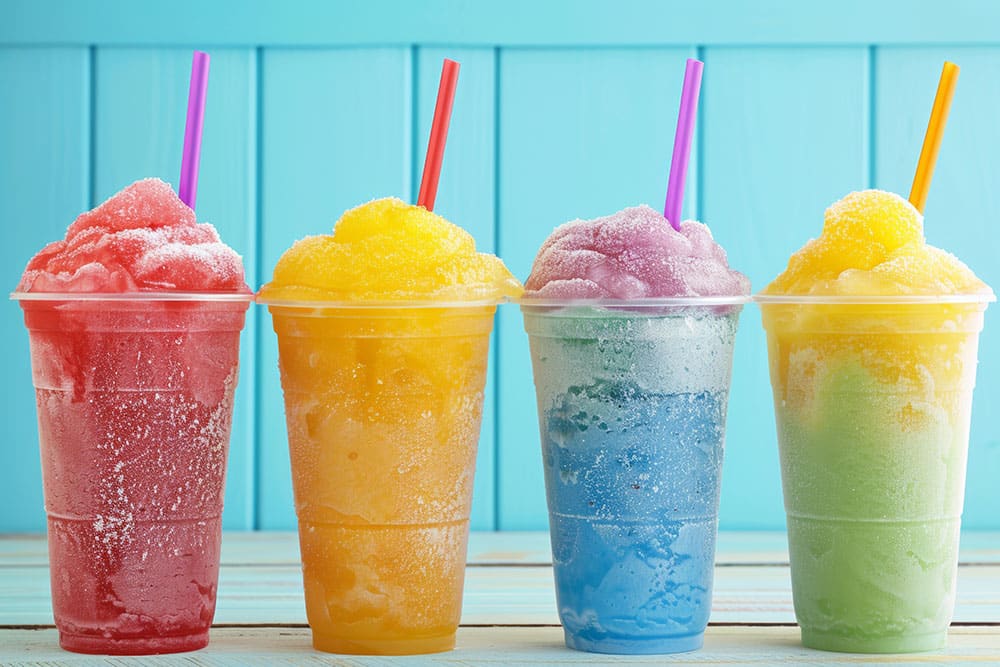
The FSA has released guidelines that relate specifically to slushy drinks. This is because of the levels of glycerol in some of these products and the way they are sometimes consumed. In some slushie drinks, it creates the slushy texture and sweetens, so can appear in relatively high levels compared to other foods and drinks. It is sometimes sold as a ‘bottomless’ drink, particularly in family orientated venues, leading to high levels of consumption over short time periods.
Glycerol intoxication can happen in children aged about ten and under, causing headaches, sickness, and in extreme cases, shock, hypoglycaemia and loss of consciousness. This is because their smaller bodies cannot break glycerol down as efficiently as an adult or older child.
Because some slushy drinks contain particularly high levels of glycerol, the FSA recommends that children under 10 only consume limited amounts (one drink per day) and retailers do not offer free refills.
Regarding children and babies under 7, the FSA recommends that slushy drinks are completely avoided.
The FSA have made four recommendations to food businesses regarding slushy drinks (updated 2025):
Follow this link for FSA guidelines for businesses. These updated, age-specific guidelines were issued in 2025; guidelines on the use of glycerol may change accordingly if future FSA / public health investigations reveal new information.
The Safer Food Group has produced a free poster, updated May 2026, to help you communicate the new rules with your customers. Download the poster from our resource library.
As well as the guidelines issued to food businesses, the FSA have updated their Food Additives page for consumers. It now includes specific advice regarding glycerol:
"Slush ice drinks or ‘slushies’ can contain the ingredient glycerol (E 422) as a substitute for sugar. This additive is used at levels required to create the ‘slush’ effect.
Children aged under seven should not consume these drinks, because they may cause side-effects, particularly when consumed in high levels, including:
Children aged under 10 should only have one 350ml slush ice drink with glycerol a day. That’s about the same size as a can of fizzy drink, or a standard coffee."
| Age Group | FSA Recommendation | Risk Level |
| Under 7 Years | Do Not Consume | High (Potential for loss of consciousness) |
| 7 to 10 Years | Max 1x 350ml drink per day | Moderate (Avoid free refills) |
| Adults / 11+ | Safe in moderation | Low |
Is glycerol the same as sugar? No, glycerol is a sugar alcohol used as a humectant and sweetener. While it does provide sweetness, its primary role in slushies is to act as an anti-freeze to create the "slush" texture.
What are the symptoms of glycerol intoxication in children? Common symptoms include sudden headaches, nausea, and vomiting. In severe cases, it can lead to hypoglycaemia (low blood sugar) or loss of consciousness.
Does glycerol have an E-number? Yes, when used as a food additive, glycerol is known as E422.
Following the hospitalisation of 21 children after drinking slushies, in March 2025 researchers called for public health advice to be revised. Having examined cases occurring between 2018 and 2024, academics at University College Dublin highlighted glycerol intoxication in children of seven years old. Given the variable body composition of children, they suggested that guidelines for consumption should be based on weight rather than age. Alternatively, they recommended a higher age restriction - these findings in part drove the revised guidelines issued in July 2025.
Ensuring your staff understand additives like E422 is a key part of modern food safety. For more in-depth knowledge on chemical hazards and ingredient safety, see our Level 2 Food Hygiene Certificate and Food Allergy Training courses.
Glycerol is an ingredient that is added to some food and drink, to keep products moist, preserve them, to change their texture or to sweeten them. Glycerin (or glycerine) is a very closely related ingredient.
It is also widely used in pharmaceuticals. For instance, it can be used in cough syrups and topical treatments including wound and burn creams.
Following a number of cases of glycerol intoxication in children, the FSA and FSS have issued guidelines to food manufacturers and retailers regarding levels in food and drink and how to serve specific products. The purpose of these guidelines is to help retailers and parents understand the risk to children from drinking slushies. The guidelines relating to the UK glycerol slushie age limit were updated and re-released by the FSA and FSS in July 2025 to increase the age threshold for slushie drinks - this article reflects those changes.
Because it is a sweetener and moistener, many processed foods contain small quantities of glycerol. Check your packet of tortilla wraps, chewing gum, cake icing or cereal bars. Glycerol usually appears towards the bottom of the ingredients list, showing that that product contains a small amount.
The FSA has released guidelines that relate specifically to slushy drinks. This is because of the levels of glycerol in some of these products and the way they are sometimes consumed. In some slushie drinks, it creates the slushy texture and sweetens, so can appear in relatively high levels compared to other foods and drinks. It is sometimes sold as a ‘bottomless’ drink, particularly in family orientated venues, leading to high levels of consumption over short time periods.
Glycerol intoxication can happen in children aged about ten and under, causing headaches, sickness, and in extreme cases, shock, hypoglycaemia and loss of consciousness. This is because their smaller bodies cannot break glycerol down as efficiently as an adult or older child.
Because some slushy drinks contain particularly high levels of glycerol, the FSA recommends that children under 10 only consume limited amounts (one drink per day) and retailers do not offer free refills.
Regarding children and babies under 7, the FSA recommends that slushy drinks are completely avoided.
The FSA have made four recommendations to food businesses regarding slushy drinks (updated 2025):
Follow this link for FSA guidelines for businesses. These updated, age-specific guidelines were issued in 2025; guidelines on the use of glycerol may change accordingly if future FSA / public health investigations reveal new information.
The Safer Food Group has produced a free poster, updated May 2026, to help you communicate the new rules with your customers. Download the poster from our resource library.
As well as the guidelines issued to food businesses, the FSA have updated their Food Additives page for consumers. It now includes specific advice regarding glycerol:
"Slush ice drinks or ‘slushies’ can contain the ingredient glycerol (E 422) as a substitute for sugar. This additive is used at levels required to create the ‘slush’ effect.
Children aged under seven should not consume these drinks, because they may cause side-effects, particularly when consumed in high levels, including:
Children aged under 10 should only have one 350ml slush ice drink with glycerol a day. That’s about the same size as a can of fizzy drink, or a standard coffee."
| Age Group | FSA Recommendation | Risk Level |
| Under 7 Years | Do Not Consume | High (Potential for loss of consciousness) |
| 7 to 10 Years | Max 1x 350ml drink per day | Moderate (Avoid free refills) |
| Adults / 11+ | Safe in moderation | Low |
Is glycerol the same as sugar? No, glycerol is a sugar alcohol used as a humectant and sweetener. While it does provide sweetness, its primary role in slushies is to act as an anti-freeze to create the "slush" texture.
What are the symptoms of glycerol intoxication in children? Common symptoms include sudden headaches, nausea, and vomiting. In severe cases, it can lead to hypoglycaemia (low blood sugar) or loss of consciousness.
Does glycerol have an E-number? Yes, when used as a food additive, glycerol is known as E422.
Following the hospitalisation of 21 children after drinking slushies, in March 2025 researchers called for public health advice to be revised. Having examined cases occurring between 2018 and 2024, academics at University College Dublin highlighted glycerol intoxication in children of seven years old. Given the variable body composition of children, they suggested that guidelines for consumption should be based on weight rather than age. Alternatively, they recommended a higher age restriction - these findings in part drove the revised guidelines issued in July 2025.
Ensuring your staff understand additives like E422 is a key part of modern food safety. For more in-depth knowledge on chemical hazards and ingredient safety, see our Level 2 Food Hygiene Certificate and Food Allergy Training courses.
Join 950,000+ learners
Explore our award winning online video based training

The Safer Food Group
Unit 2, Integrity House,
Lower Lumsdale, Matlock
DE4 5EX

Back
to top
© The Safer Food Group 2026 | Privacy policy