Food & safety
Pathogenic bacteria and the Danger Zone
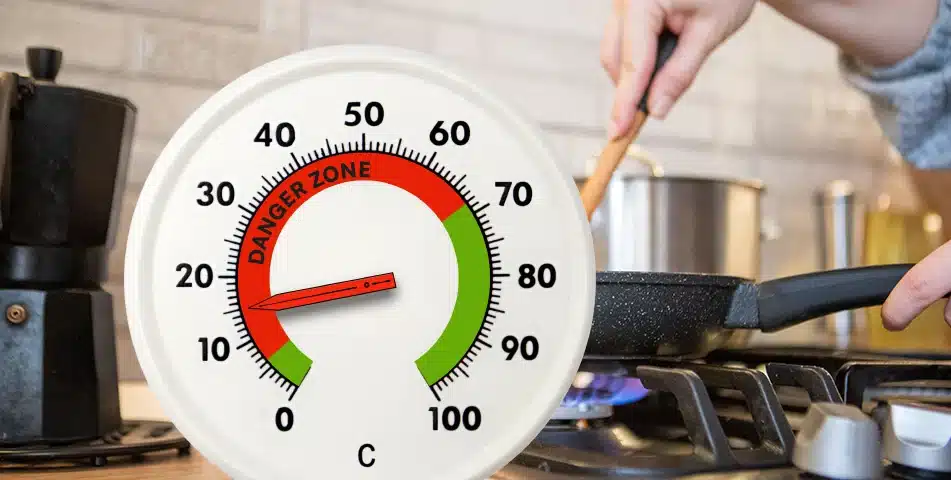


Pathogenic bacteria, also known as pathogens, are the organisms responsible for most foodborne illnesses. When pathogenic bacteria find themselves in the right conditions they multiply simply by each cell dividing in two, repeatedly. In this way, a single bacteria cell becomes two cells. Two cells become four, then four become eight (and so on). In ideal conditions, bacteria are capable of dividing in this way once every 10-15 mins; enabling them to multiply very quickly.
Pathogenic bacteria need ALL of the following factors to be present to multiply:
You’ve just discovered two vitally important facts about food safety:
However, the danger doesn't stop there - pathogens are not the only organisms in food that can cause us serious harm.
Toxins and spores
Many pathogenic bacteria are known to release poisonous substances called toxins. Some release them during their life, and some when they are destroyed by cooking heat. Cooking kills most pathogenic bacteria but the toxins left behind can still cause illness.
Several pathogenic bacteria are also resistant to extreme temperatures. They achieve this by developing a protective shell known as a spore. They simply wait until they return to the Danger Zone and start multiplying again. Rice is particularly susceptible to spore forming pathogenic bacteria. So, restricting the growth of pathogens is vital in order to minimise the risk of the development of both toxins and spores
We now know that pathogens need four factors to multiply. By restricting these four factors - food, moisture, warmth and time - you restrict the pathogen's opportunity to multiply to dangerous levels. Therefore - keeping food out of the warm Danger Zone for as much time as possible is a major factor in controlling pathogenic growth.
It is likely that the temperature of your kitchen sits comfortably within the Danger Zone. Every minute food spends outside the chiller, cooker, hot-hold or freezer, it is exposed to the Danger Zone and pathogenic bacteria will be able to multiply. Your job is to monitor and reduce the time food spends in the Danger Zone during its journey.
Think about the processes that happen to a joint of meat within the course of food production.
At all of these stages, the meat spends time in the danger zone. As part of your HACCP plan, you will need to assess the time spent in the danger zone and reduce wherever practical. At an absolute maximum, high risk foods should spend no longer than 2 hours within danger zone temperatures, and this time is further reduced on warmer days.
To understand more about pathogenic bacteria and how to keep them out of the Danger Zone, have a look at our Level 2 Food Safety and Level 2 HACCP courses. Less bacteria means safer food, happier customers and a better business!
Join 950,000+ learners
Explore our award winning online video based training

The Safer Food Group
Unit 2, Integrity House,
Lower Lumsdale, Matlock
DE4 5EX

Back
to top
© The Safer Food Group 2026 | Privacy policy