Food & safety
How to organise a fridge for food safety


A well-ordered refrigerator is a cornerstone of a safe and efficient kitchen. Knowing how to organise a fridge for food safety is essential for preventing foodborne illnesses and minimising waste. This practical guide, drawing on advice from the Food Standards Agency (FSA), will help you arrange your fridge to keep your food fresh and your family safe. Whilst many of the tips in here are applicable to commercial fridges, food storage in a commercial setting should be in line with your organisation’s food safety management system.
Refrigeration works by slowing down the growth of harmful bacteria, keeping food out of the "temperature danger zone" which is between 8°C and 63°C. Incorrect storage can lead to cross-contamination, where bacteria from raw foods spread to ready-to-eat items. Proper organisation, combined with correct temperature control, is your best defence against germs like Campylobacter and Listeria.
The foundation of food safety is maintaining the right temperature. Your fridge should be set to 5°C or below. Your freezer should be kept at -18°C or below.
The key principle of fridge organisation is to store ready-to-eat foods above raw foods to prevent drips and spills from causing contamination. Here’s how to organise your fridge from top to bottom:
In order to keep these foods away from high risk foods, store them at the top of your fridge. Foods that will not be cooked before eating need to be kept separately from those that may carry food poisoning bacteria. Be aware though - vegetables from the ground that still carry soil can also harbour pathogens, so need to be washed thoroughly before storing in the fridge, or kept separately from foods that will not be cooked.
These shelves are for higher risk foods that may not be cooked before eating. This includes dairy products (yoghurt, milk, cheese), cooked meats, leftovers, and prepared meals. This placement keeps them safe from any juices dripping from raw foods stored below.
Always store raw meat, poultry, and fish here and keep them in sealed containers to hold any leaks. These foods have the greatest risk of carrying food poisoning bacteria. This is the coldest part of the fridge and the multiplication of pathogens slows down in colder temperatures. Keeping them below all other foods also reduces the risk of bacteria spreading via leaks.
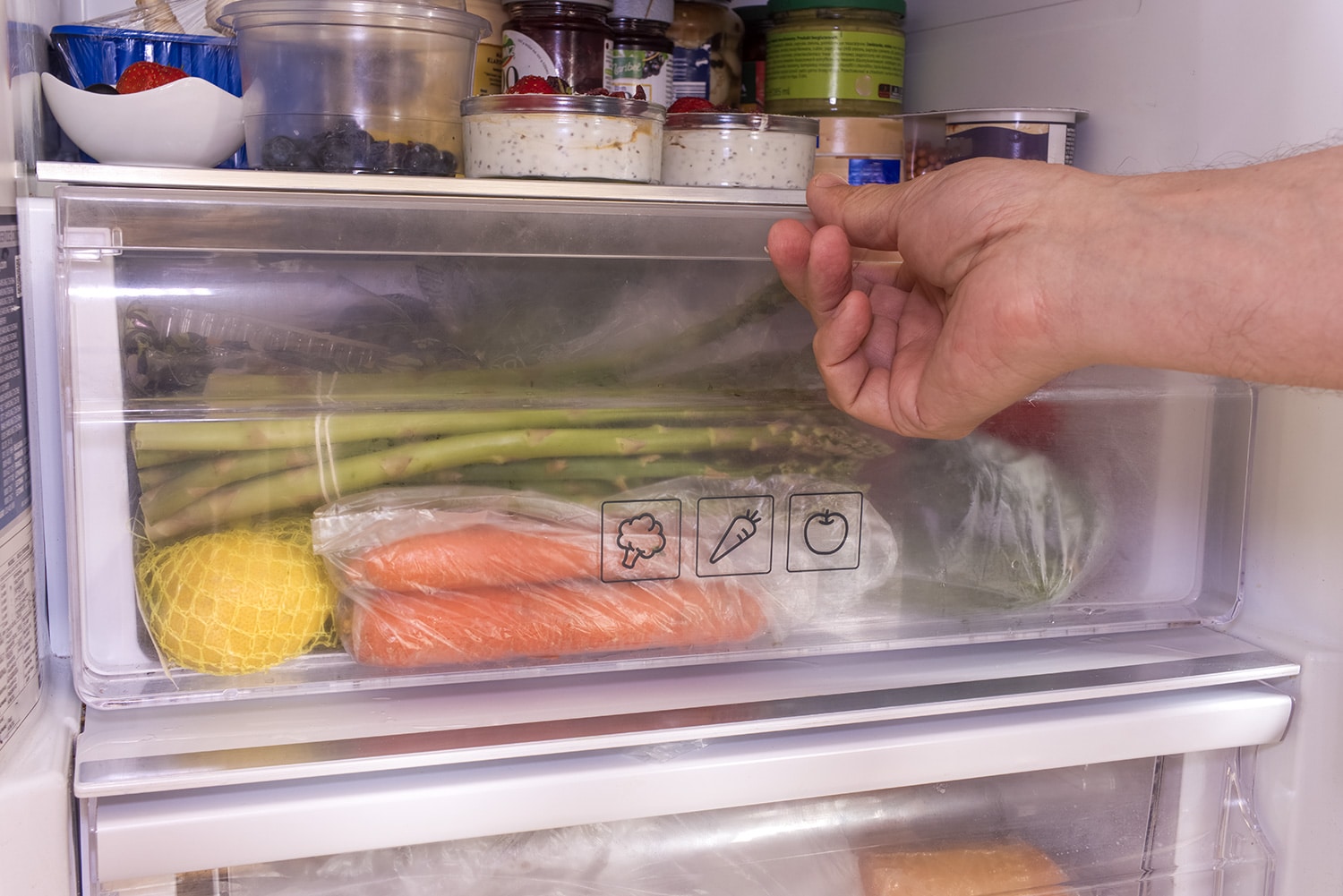
Although these sections were originally designed for salad, we recommend that nothing is stored below raw meats, poultry and fish, to avoid direct cross contamination of raw and ready to eat items and avoid raw juices/blood from being able to drip onto food that will not then be cooked. If appropriate, this section could be used for raw meat and fish storage, as long as it is used only for these items.
The door is the warmest part of the fridge. It is best for storing foods with natural preservatives and longer shelf lives like jams, juices, and condiments. The FSA advises against storing milk or eggs in the door due to temperature fluctuations. Keep them on a shelf instead.
Taking a few minutes to properly organise a fridge for food safety is a simple yet effective habit. By following the FSA's guidelines on temperature and storage, you can significantly reduce the risk of food poisoning, save money by reducing waste, and ensure the food you serve is always safe and fresh.
A well-ordered refrigerator is a cornerstone of a safe and efficient kitchen. Knowing how to organise a fridge for food safety is essential for preventing foodborne illnesses and minimising waste. This practical guide, drawing on advice from the Food Standards Agency (FSA), will help you arrange your fridge to keep your food fresh and your family safe. Whilst many of the tips in here are applicable to commercial fridges, food storage in a commercial setting should be in line with your organisation’s food safety management system.
Refrigeration works by slowing down the growth of harmful bacteria, keeping food out of the "temperature danger zone" which is between 8°C and 63°C. Incorrect storage can lead to cross-contamination, where bacteria from raw foods spread to ready-to-eat items. Proper organisation, combined with correct temperature control, is your best defence against germs like Campylobacter and Listeria.
The foundation of food safety is maintaining the right temperature. Your fridge should be set to 5°C or below. Your freezer should be kept at -18°C or below.
The key principle of fridge organisation is to store ready-to-eat foods above raw foods to prevent drips and spills from causing contamination. Here’s how to organise your fridge from top to bottom:
In order to keep these foods away from high risk foods, store them at the top of your fridge. Foods that will not be cooked before eating need to be kept separately from those that may carry food poisoning bacteria. Be aware though - vegetables from the ground that still carry soil can also harbour pathogens, so need to be washed thoroughly before storing in the fridge, or kept separately from foods that will not be cooked.
These shelves are for higher risk foods that may not be cooked before eating. This includes dairy products (yoghurt, milk, cheese), cooked meats, leftovers, and prepared meals. This placement keeps them safe from any juices dripping from raw foods stored below.
Always store raw meat, poultry, and fish here and keep them in sealed containers to hold any leaks. These foods have the greatest risk of carrying food poisoning bacteria. This is the coldest part of the fridge and the multiplication of pathogens slows down in colder temperatures. Keeping them below all other foods also reduces the risk of bacteria spreading via leaks.
Although these sections were originally designed for salad, we recommend that nothing is stored below raw meats, poultry and fish, to avoid direct cross contamination of raw and ready to eat items and avoid raw juices/blood from being able to drip onto food that will not then be cooked. If appropriate, this section could be used for raw meat and fish storage, as long as it is used only for these items.
The door is the warmest part of the fridge. It is best for storing foods with natural preservatives and longer shelf lives like jams, juices, and condiments. The FSA advises against storing milk or eggs in the door due to temperature fluctuations. Keep them on a shelf instead.
Taking a few minutes to properly organise a fridge for food safety is a simple yet effective habit. By following the FSA's guidelines on temperature and storage, you can significantly reduce the risk of food poisoning, save money by reducing waste, and ensure the food you serve is always safe and fresh.
Join 950,000+ learners
Explore our award winning online video based training

The Safer Food Group
Unit 2, Integrity House,
Lower Lumsdale, Matlock
DE4 5EX

Back
to top
© The Safer Food Group 2026 | Privacy policy