News
Food & safety
Fire Safety: From Rules to Roles
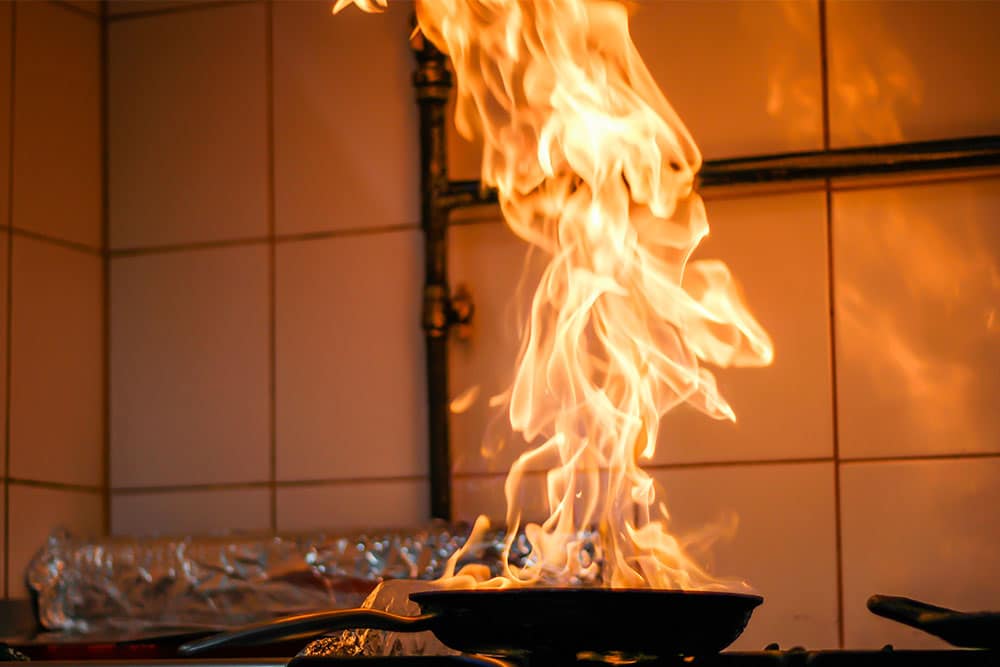


For those responsible for compliance and training, fire safety often feels like a series of hardware checks: Are the extinguishers serviced? Are the fire exit signs up? Have we got enough fire blankets?
However, at The Safer Food Group, we believe that real safety isn't found in the equipment - it’s found in your people and your culture. As we launch our new Fire Safety Awareness training course, we look at three critical considerations when planning your own workplace fire safety.
Most serious incidents aren't the result of unstoppable fires. They are the result of predictable failures: a blocked fire exit, a propped-open fire door, or a "not my job" attitude toward housekeeping.
The Insight: We need to move away from reacting and toward proactive planning. Fire safety is about management responsibility. A fire is simply the trigger that exposes gaps in your supervision, planning or processes.
How our course helps: We focus heavily on Fire Risk Assessment fundamentals and Prevention. We teach learners how to identify fuel and ignition risks before they ever become a hazard, moving the focus from fire-fighting to fire-prevention.
Have you ever noticed that staff can pass a written test but still hesitate during a fire drill? That’s because most training focuses on knowledge rather than behaviour. Under pressure, people don’t default to what they read on a slide; they default to instinct.
The Insight: If staff don't have absolute clarity on their specific role, dangerous assumptions take over. Hesitation in an emergency is almost always a result of unclear plans and responsibilities.
How our course helps: Our unit emphasises role-based safety. We break down the specific responsibilities of responsible officers, fire marshals, managers / supervisors and all colleagues in the workplace, ensuring that when the alarm sounds, your team acts on clear procedures rather than panicked instinct.
We often focus on the physical elements of fire safety. While extinguishers are essential, they are useless if a staff member doesn't understand the correct use of the equipment or feel empowered to use it.
The Insight: Equipment supports safety - it doesn't create it. Leadership and supervision do. Policies don't determine outcomes in a crisis; people do.
How our course helps: We teach the use of fire-fighting equipment with a focus on decision-making. The most important lesson isn't just how to use an extinguisher, but when it is safe to do so and when the only correct action is evacuation. We view fire safety as a human system, not a technical one.
Our Fire Safety Awareness course includes a self audit, which encourages the learner to reflect on the course and relate their learning to the practical context of their own workplace. This moves learning from theory into practice, encourages the learner to practice scenarios in their heads and gives confidence to act appropriately in real emergency situations.
Compliance shouldn't be a headache; it should be your business’s greatest strength. By training your team to see fire safety as a collective responsibility, you protect your people, your property, and your reputation. Our new Fire Safety Awareness course is engaging, accessible, and designed to drive real-world changes in practice.
Our new training provides an introductory, awareness-level understanding that equips learners with:
Everyone. This course is a great foundation for every employee and volunteer across offices, hospitality, retail, healthcare, early years, and industrial settings. It’s for team leaders who promote safe practices and for small business owners carrying the full weight of fire precautions. When everyone understands their role, a workplace becomes significantly safer.
This course provides the first step to getting your team prepared for fire incidents. Make sure you risk assess and follow up with formal fire marshal training and more specialised input from fire experts where needed.
For those responsible for compliance and training, fire safety often feels like a series of hardware checks: Are the extinguishers serviced? Are the fire exit signs up? Have we got enough fire blankets?
However, at The Safer Food Group, we believe that real safety isn't found in the equipment - it’s found in your people and your culture. As we launch our new Fire Safety Awareness training course, we look at three critical considerations when planning your own workplace fire safety.
Most serious incidents aren't the result of unstoppable fires. They are the result of predictable failures: a blocked fire exit, a propped-open fire door, or a "not my job" attitude toward housekeeping.
The Insight: We need to move away from reacting and toward proactive planning. Fire safety is about management responsibility. A fire is simply the trigger that exposes gaps in your supervision, planning or processes.
How our course helps: We focus heavily on Fire Risk Assessment fundamentals and Prevention. We teach learners how to identify fuel and ignition risks before they ever become a hazard, moving the focus from fire-fighting to fire-prevention.
Have you ever noticed that staff can pass a written test but still hesitate during a fire drill? That’s because most training focuses on knowledge rather than behaviour. Under pressure, people don’t default to what they read on a slide; they default to instinct.
The Insight: If staff don't have absolute clarity on their specific role, dangerous assumptions take over. Hesitation in an emergency is almost always a result of unclear plans and responsibilities.
How our course helps: Our unit emphasises role-based safety. We break down the specific responsibilities of responsible officers, fire marshals, managers / supervisors and all colleagues in the workplace, ensuring that when the alarm sounds, your team acts on clear procedures rather than panicked instinct.
We often focus on the physical elements of fire safety. While extinguishers are essential, they are useless if a staff member doesn't understand the correct use of the equipment or feel empowered to use it.
The Insight: Equipment supports safety - it doesn't create it. Leadership and supervision do. Policies don't determine outcomes in a crisis; people do.
How our course helps: We teach the use of fire-fighting equipment with a focus on decision-making. The most important lesson isn't just how to use an extinguisher, but when it is safe to do so and when the only correct action is evacuation. We view fire safety as a human system, not a technical one.
Our Fire Safety Awareness course includes a self audit, which encourages the learner to reflect on the course and relate their learning to the practical context of their own workplace. This moves learning from theory into practice, encourages the learner to practice scenarios in their heads and gives confidence to act appropriately in real emergency situations.
Compliance shouldn't be a headache; it should be your business’s greatest strength. By training your team to see fire safety as a collective responsibility, you protect your people, your property, and your reputation. Our new Fire Safety Awareness course is engaging, accessible, and designed to drive real-world changes in practice.
Our new training provides an introductory, awareness-level understanding that equips learners with:
Everyone. This course is a great foundation for every employee and volunteer across offices, hospitality, retail, healthcare, early years, and industrial settings. It’s for team leaders who promote safe practices and for small business owners carrying the full weight of fire precautions. When everyone understands their role, a workplace becomes significantly safer.
This course provides the first step to getting your team prepared for fire incidents. Make sure you risk assess and follow up with formal fire marshal training and more specialised input from fire experts where needed.
Join 950,000+ learners
Explore our award winning online video based training

The Safer Food Group
Unit 2, Integrity House,
Lower Lumsdale, Matlock
DE4 5EX

Back
to top
© The Safer Food Group 2026 | Privacy policy