Food & safety
Biological hazards in food


A key part of good food safety practice is removing, or at least minimising, the hazards that create the risk of consumer illness. To help us better understand these hazards and how to deal with them, we split them into 4 key categories:
Of these, biological hazards are considered the biggest threat - because they carry the greatest risk of serious harm to many people, and are often the most difficult to control. Let’s have a look at biological contamination of food, how it’s caused and how we can prevent or minimise it.
To understand biological hazards, we need to understand why they are such a threat.
Food poisoning occurs when pathogenic bacteria - a major biological hazard - contaminate food and are then allowed the opportunity to multiply sufficiently to overcome our natural defences and threaten our health. Symptoms of food poisoning are unpleasant and often include vomiting and diarrhoea, but recovery in most cases only takes 1-3 days. However, food poisoning can also lead to serious medical problems with life changing or even life-threatening consequences.
Groups at most risk from the effects of food poisoning include pregnant women, young children, the elderly and those with a chronic illness or reduced immunity. Getting rid of pathogenic bacteria from the environment completely is impossible, so preventing them from reaching food and / or multiplying is a key responsibility of all food handlers.
Yes, but some foods are at higher risk from pathogenic bacteria than others.
High risk foods
Foods categorised as high-risk include raw and cooked meats, dairy, and seafood, and foods containing these as ingredients. Other high-risk food examples include gravy, sauces, stock, soup, pate and prawns. High-risk foods are high in protein and usually contain high moisture levels; conditions that pathogenic bacteria love.
Low risk foods
Low-risk foods are those that generally speaking can be stored at ambient temperatures (without refrigeration) such as salads and vegetables. Dried foods are generally speaking low-risk foods but can become high-risk once cooked. Rice is a good example of this.
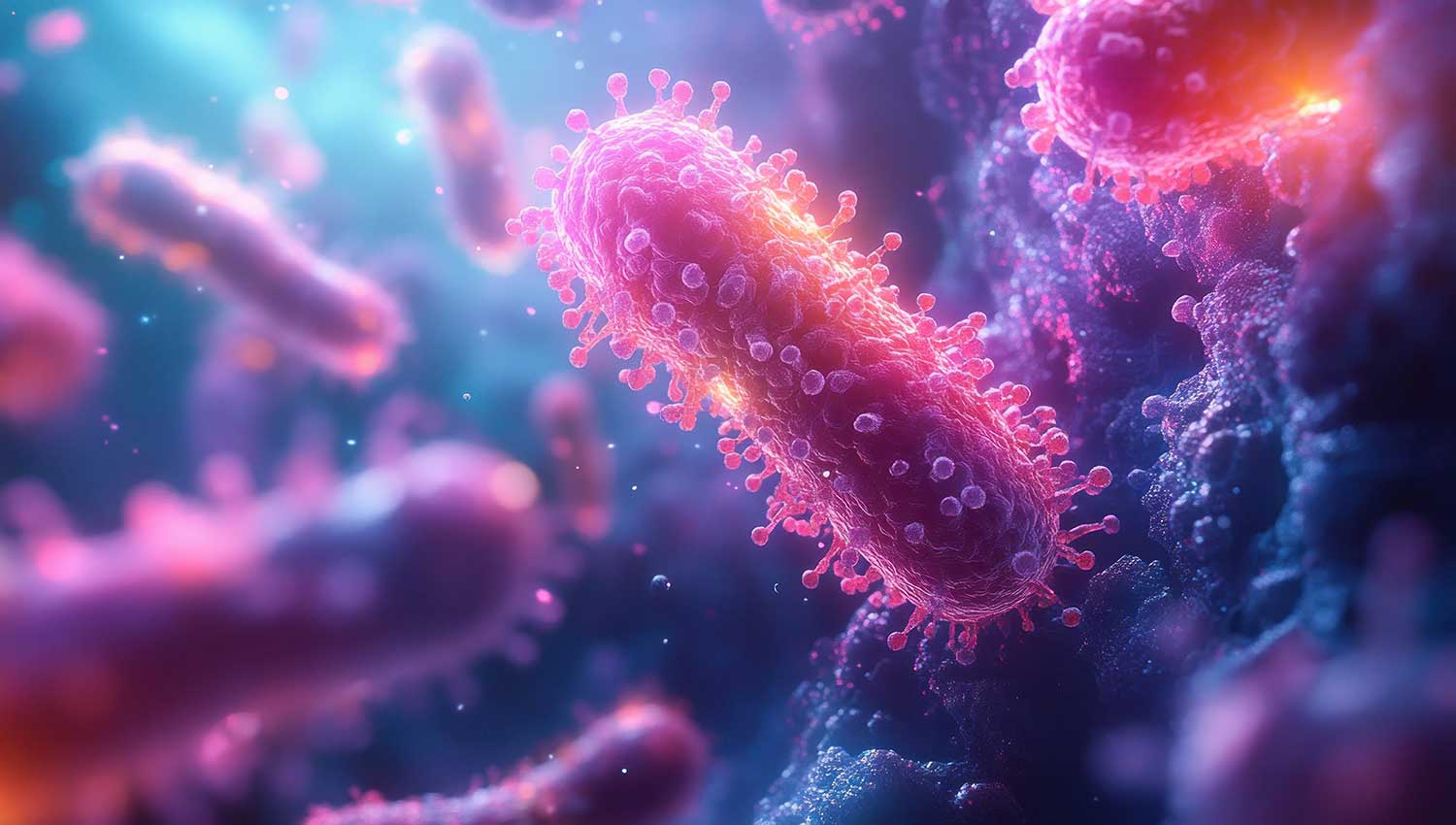
We now know that pathogenic bacteria are a critical biological hazard. Pathogenic bacteria are dangerous microscopic bacteria; common examples of include Salmonella, E. coli, and Clostridium. They enter food through contamination and can quickly multiply to dangerous levels.
When bacteria find themselves in the right conditions, they multiply by each cell dividing in two. Two cells become four, then four become eight (and so on). Bacteria can divide in this way once every 10-15 minutes allowing them to multiply rapidly.
Bacteria need the following factors to be present to multiply:
To prevent bacteria multiplying to a dangerous level we need to:
Minimise the time high risk food spends in the Danger Zone
Many pathogenic bacteria release poisonous substances called toxins. Cooking kills most pathogenic bacteria but the toxins left behind can still cause illness. Toxins are one of the reasons why appropriate and continuous chilled and frozen storage is so important to food safety.
Several pathogenic bacteria are resistant to extreme temperatures. They achieve this by developing a protective shell known as a spore. When returned to the optimal conditions, they start multiplying again. Rice is particularly susceptible to spore forming pathogenic bacteria.
No cooking, reheating or other process will make food safe once bacterial toxins are present. This means that you should keep raw and high-risk foods in the chiller and throw away if in doubt.
We are constantly exposed to pathogenic viruses. Some can be confused with food poisoning, due to similar symptoms, for example Norovirus. Sometimes a new pathogenic virus emerges from which we have no immunity, for example Coronavirus
Pathogenic viruses spread person-to-person through airborne particles produced when an infected person coughs or sneezes, and when contaminated hands touch and contaminate other surfaces and objects.
The key to defeating the threat of all pathogenic viruses is to break the chain of contamination. Appropriate distancing, hand-hygiene, cleaning and disinfection, teamwork and early illness reporting are all key to defeating pathogenic viruses.
Biological hazards - from fast-multiplying bacteria to resilient viruses - remain the leading cause of foodborne illness in the UK. But they don't have to be a risk to your kitchen. Preventing biological contamination doesn't require a degree in microbiology; it simply requires a solid understanding of time and temperature controls, cross-contamination prevention, and robust hygiene habits. Whether you are an individual looking to step into the food industry or a manager protecting an entire business, mastering these fundamentals is the best insurance you can have. Ready to build your confidence and lock in your compliance? Explore our fully accredited Level 2 Food Hygiene courses today.
A biological hazard is the harmful agent itself (such as Salmonella or Norovirus). Biological contamination occurs when that hazard accidentally gets introduced into food - for example, if raw chicken juices drip onto a ready-to-eat salad.
The Temperature Danger Zone is between 5°C and 63°C. In this range, pathogenic bacteria can multiply rapidly, sometimes doubling in number every 20 minutes. Keeping cold foods below 5°C and cooking hot foods thoroughly ( for example, to at least 75°C, or 70°C for two minutes) is essential to stop bacterial growth.
Thorough cooking kills most vegetative pathogenic bacteria (like E. coli and Salmonella) and viruses. However, cooking cannot destroy certain heat-resistant toxins or bacterial spores (such as those produced by Bacillus cereus or Staphylococcus aureus) if food has been left in the Danger Zone for too long before cooking. Prevention during storage is just as vital as cooking.
If you are a food handler manually preparing or cooking food, a Level 2 Food Hygiene Certificate covers everything you need to know about biological hazards, cross-contamination, and temperature control. If you are a supervisor, kitchen manager, or business owner responsible for implementing a HACCP food safety management system, a Level 3 Food Supervisor Certificate is recommended.
A key part of good food safety practice is removing, or at least minimising, the hazards that create the risk of consumer illness. To help us better understand these hazards and how to deal with them, we split them into 4 key categories:
Of these, biological hazards are considered the biggest threat - because they carry the greatest risk of serious harm to many people, and are often the most difficult to control. Let’s have a look at biological contamination of food, how it’s caused and how we can prevent or minimise it.
To understand biological hazards, we need to understand why they are such a threat.
Food poisoning occurs when pathogenic bacteria - a major biological hazard - contaminate food and are then allowed the opportunity to multiply sufficiently to overcome our natural defences and threaten our health. Symptoms of food poisoning are unpleasant and often include vomiting and diarrhoea, but recovery in most cases only takes 1-3 days. However, food poisoning can also lead to serious medical problems with life changing or even life-threatening consequences.
Groups at most risk from the effects of food poisoning include pregnant women, young children, the elderly and those with a chronic illness or reduced immunity. Getting rid of pathogenic bacteria from the environment completely is impossible, so preventing them from reaching food and / or multiplying is a key responsibility of all food handlers.
Yes, but some foods are at higher risk from pathogenic bacteria than others.
High risk foods
Foods categorised as high-risk include raw and cooked meats, dairy, and seafood, and foods containing these as ingredients. Other high-risk food examples include gravy, sauces, stock, soup, pate and prawns. High-risk foods are high in protein and usually contain high moisture levels; conditions that pathogenic bacteria love.
Low risk foods
Low-risk foods are those that generally speaking can be stored at ambient temperatures (without refrigeration) such as salads and vegetables. Dried foods are generally speaking low-risk foods but can become high-risk once cooked. Rice is a good example of this.
We now know that pathogenic bacteria are a critical biological hazard. Pathogenic bacteria are dangerous microscopic bacteria; common examples of include Salmonella, E. coli, and Clostridium. They enter food through contamination and can quickly multiply to dangerous levels.
When bacteria find themselves in the right conditions, they multiply by each cell dividing in two. Two cells become four, then four become eight (and so on). Bacteria can divide in this way once every 10-15 minutes allowing them to multiply rapidly.
Bacteria need the following factors to be present to multiply:
To prevent bacteria multiplying to a dangerous level we need to:
Minimise the time high risk food spends in the Danger Zone
Many pathogenic bacteria release poisonous substances called toxins. Cooking kills most pathogenic bacteria but the toxins left behind can still cause illness. Toxins are one of the reasons why appropriate and continuous chilled and frozen storage is so important to food safety.
Several pathogenic bacteria are resistant to extreme temperatures. They achieve this by developing a protective shell known as a spore. When returned to the optimal conditions, they start multiplying again. Rice is particularly susceptible to spore forming pathogenic bacteria.
No cooking, reheating or other process will make food safe once bacterial toxins are present. This means that you should keep raw and high-risk foods in the chiller and throw away if in doubt.
We are constantly exposed to pathogenic viruses. Some can be confused with food poisoning, due to similar symptoms, for example Norovirus. Sometimes a new pathogenic virus emerges from which we have no immunity, for example Coronavirus
Pathogenic viruses spread person-to-person through airborne particles produced when an infected person coughs or sneezes, and when contaminated hands touch and contaminate other surfaces and objects.
The key to defeating the threat of all pathogenic viruses is to break the chain of contamination. Appropriate distancing, hand-hygiene, cleaning and disinfection, teamwork and early illness reporting are all key to defeating pathogenic viruses.
Biological hazards - from fast-multiplying bacteria to resilient viruses - remain the leading cause of foodborne illness in the UK. But they don't have to be a risk to your kitchen. Preventing biological contamination doesn't require a degree in microbiology; it simply requires a solid understanding of time and temperature controls, cross-contamination prevention, and robust hygiene habits. Whether you are an individual looking to step into the food industry or a manager protecting an entire business, mastering these fundamentals is the best insurance you can have. Ready to build your confidence and lock in your compliance? Explore our fully accredited Level 2 Food Hygiene courses today.
A biological hazard is the harmful agent itself (such as Salmonella or Norovirus). Biological contamination occurs when that hazard accidentally gets introduced into food - for example, if raw chicken juices drip onto a ready-to-eat salad.
The Temperature Danger Zone is between 5°C and 63°C. In this range, pathogenic bacteria can multiply rapidly, sometimes doubling in number every 20 minutes. Keeping cold foods below 5°C and cooking hot foods thoroughly ( for example, to at least 75°C, or 70°C for two minutes) is essential to stop bacterial growth.
Thorough cooking kills most vegetative pathogenic bacteria (like E. coli and Salmonella) and viruses. However, cooking cannot destroy certain heat-resistant toxins or bacterial spores (such as those produced by Bacillus cereus or Staphylococcus aureus) if food has been left in the Danger Zone for too long before cooking. Prevention during storage is just as vital as cooking.
If you are a food handler manually preparing or cooking food, a Level 2 Food Hygiene Certificate covers everything you need to know about biological hazards, cross-contamination, and temperature control. If you are a supervisor, kitchen manager, or business owner responsible for implementing a HACCP food safety management system, a Level 3 Food Supervisor Certificate is recommended.
Join 950,000+ learners
Explore our award winning online video based training

The Safer Food Group
Unit 2, Integrity House,
Lower Lumsdale, Matlock
DE4 5EX

Back
to top
© The Safer Food Group 2026 | Privacy policy