Food & safety
The Hidden Allergen Risks in Your School
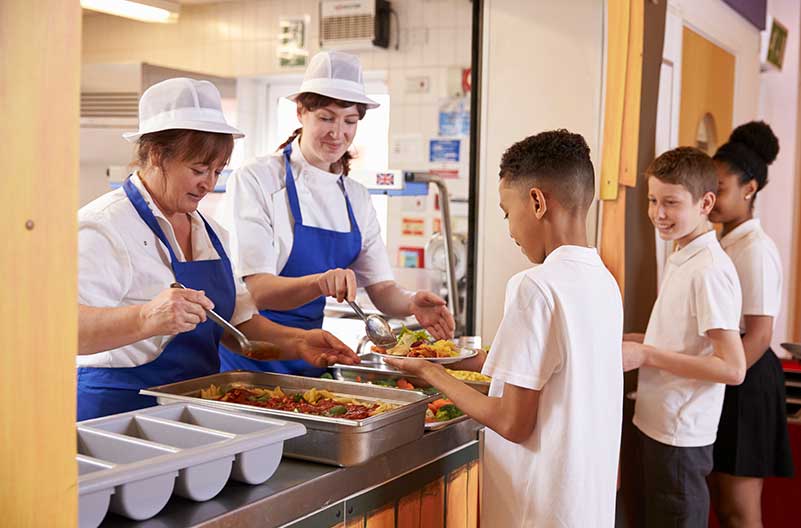


When it comes to pupil safety, school sites need to be considered as complex, moving eco-systems, rather than just a series of classrooms.
With food allergies, there is a dangerous misconception that still lingers in some UK schools: that allergen safety is a kitchen problem. With Benedict's Law driving new legislation, it’s time to look at the big picture before the September 2026 deadline. Food is never contained to just the dining hall - and therefore neither are the risks of allergies.
If a pupil suffers anaphylactic shock, the first responder won't necessarily be a caterer or a designated first aider. It will be whoever is standing closest.
Here is how to consider your school’s hidden allergy risks and ensure your school team is ready in time for the new academic year.
Schools are busy, shared environments where pupils move between classrooms, dining areas, and extracurricular activities throughout the day. Because food moves with them, responsibility for managing risk cannot be restricted to one individual or a single staffing team.
Consider how easily allergenic ingredients can slip into environments where food isn’t even the main focus:
As a school leader, ask yourself three critical questions about your setting today:
Your staff members do not need to be medical experts to keep pupils safe. But under the upcoming 2026 guidelines, they do need a foundational understanding of food allergies and how to respond in an emergency.
In a medical crisis, minutes matter. Waiting for a designated first aider or a paramedic to arrive can result in delayed treatment and, in the worst cases, a tragic, avoidable fatality.
The reality of school life means that a teacher, teaching assistant, lunchtime supervisor, or member of the support team will likely be the first person to notice something is wrong. They are your true First Responders. They are the ones who must:
These moments can feel routine, but they are exactly where a chain of events either ends safely or escalates into a serious health emergency.
Ensuring that every adult on your premises remains vigilant and ready to act requires a streamlined, whole-school approach to training.
To help School Business Managers and Headteachers prepare for the upcoming statutory changes, The Safer Food Group has launched a brand-new Allergy Awareness for Schools course. Tailored specifically for educational settings (including academies, sixth forms, and colleges), it empowers your entire workforce to act confidently in an emergency.
We invite school leaders and business managers to take a complimentary trial of our new course. Evaluate the material, view the learners tracking tools, and see how easy it is to protect your pupils and embed confidence and compliance for the upcoming school year. Drop a message to info@theasferfoodgroup.com for further information.
When it comes to pupil safety, school sites need to be considered as complex, moving eco-systems, rather than just a series of classrooms.
With food allergies, there is a dangerous misconception that still lingers in some UK schools: that allergen safety is a kitchen problem. With Benedict's Law driving new legislation, it’s time to look at the big picture before the September 2026 deadline. Food is never contained to just the dining hall - and therefore neither are the risks of allergies.
If a pupil suffers anaphylactic shock, the first responder won't necessarily be a caterer or a designated first aider. It will be whoever is standing closest.
Here is how to consider your school’s hidden allergy risks and ensure your school team is ready in time for the new academic year.
Schools are busy, shared environments where pupils move between classrooms, dining areas, and extracurricular activities throughout the day. Because food moves with them, responsibility for managing risk cannot be restricted to one individual or a single staffing team.
Consider how easily allergenic ingredients can slip into environments where food isn’t even the main focus:
As a school leader, ask yourself three critical questions about your setting today:
Your staff members do not need to be medical experts to keep pupils safe. But under the upcoming 2026 guidelines, they do need a foundational understanding of food allergies and how to respond in an emergency.
In a medical crisis, minutes matter. Waiting for a designated first aider or a paramedic to arrive can result in delayed treatment and, in the worst cases, a tragic, avoidable fatality.
The reality of school life means that a teacher, teaching assistant, lunchtime supervisor, or member of the support team will likely be the first person to notice something is wrong. They are your true First Responders. They are the ones who must:
These moments can feel routine, but they are exactly where a chain of events either ends safely or escalates into a serious health emergency.
Ensuring that every adult on your premises remains vigilant and ready to act requires a streamlined, whole-school approach to training.
To help School Business Managers and Headteachers prepare for the upcoming statutory changes, The Safer Food Group has launched a brand-new Allergy Awareness for Schools course. Tailored specifically for educational settings (including academies, sixth forms, and colleges), it empowers your entire workforce to act confidently in an emergency.
We invite school leaders and business managers to take a complimentary trial of our new course. Evaluate the material, view the learners tracking tools, and see how easy it is to protect your pupils and embed confidence and compliance for the upcoming school year. Drop a message to info@theasferfoodgroup.com for further information.
We all know that speed in an emergency is often critical so test yourself and your staff on how quickly they can get to a first aid kits and back and if its quick enough or close enough to make the difference it should be making to save lives.
Join 950,000+ learners
Explore our award winning online video based training

The Safer Food Group
Unit 2, Integrity House,
Lower Lumsdale, Matlock
DE4 5EX

Back
to top
© The Safer Food Group 2026 | Privacy policy