Food & safety
Colour-coded chopping boards: a guide to preventing cross-contamination
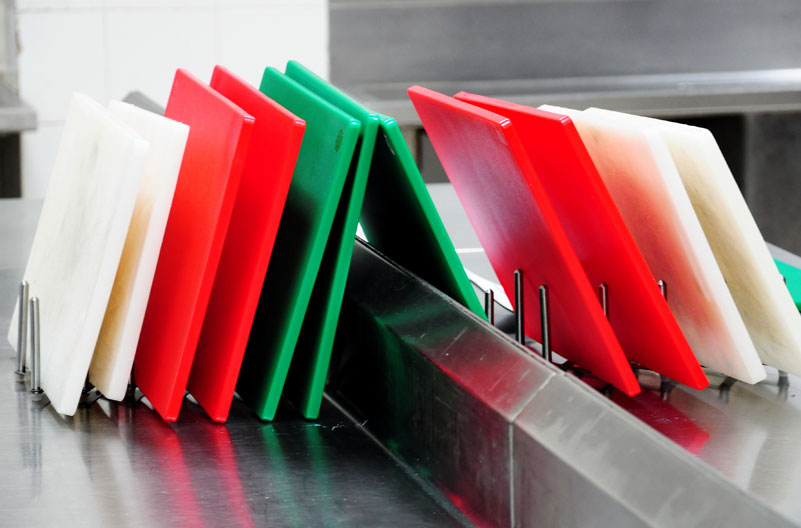


In any professional kitchen, controlling food safety hazards is fundamental to protecting consumers and maintaining compliance with UK food hygiene regulations. One of the most effective and widely recognised prerequisites in a food safety management system (HACCP) is the use of colour-coded chopping boards.
By assigning specific colours to distinct food groups, food handlers can visually identify the correct preparation surface at a glance, significantly reducing the risk of microbiological cross-contamination and allergenic cross-contact.
However, colour-coding is not a substitute for thorough cleaning and disinfection. While the system outlined below is typical in UK catering kitchens, specific colour allocations are not mandated by law and can vary depending on your employer's food safety policy.
Cross-contamination occurs when harmful bacteria (such as Campylobacter, Salmonella, or E. coli) transfer from high-risk raw ingredients to ready-to-eat foods. Similarly, allergenic cross-contact happens when trace amounts of an allergen transfer onto a food intended to be allergen-free.
A structured colour-coded system acts as a physical control measure within your Hazard Analysis and Critical Control Points (HACCP) plan. It separates raw, soil-grown, cooked, and allergy-sensitive ingredients during preparation, helping businesses meet their legal obligations under the Food Safety Act 1990 and Regulation (EC) No 852/2004.
The table below outlines the industry-standard colour coding used across most UK commercial kitchens:
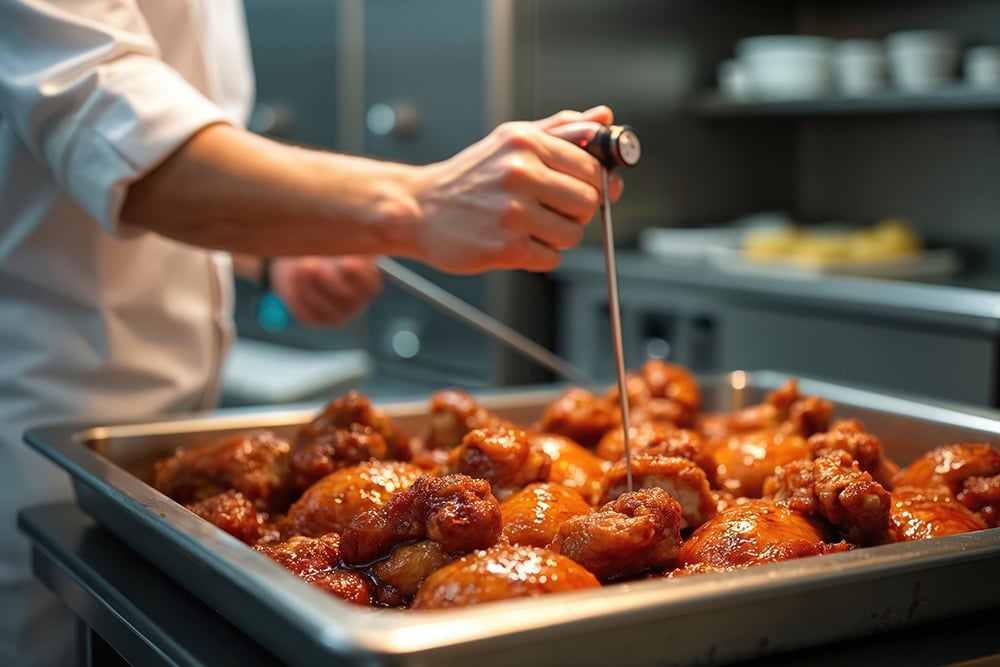
Use the red board exclusively for raw meat and poultry prior to cooking. Raw meats often contain pathogenic bacteria that are only destroyed once the food reaches a safe core cooking temperature (typically 75°C or equivalent time-temperature combinations). Keeping raw meat preparation strictly isolated prevents these pathogens from contaminating ready-to-eat items.
The yellow board is reserved for cooked meats and cooked fish. Because these foods are ready-to-eat and will not undergo further heat treatment to kill bacteria, they must never touch a surface used for raw meat or raw fish. Use this board for carving joints, slicing cooked cold meats like ham or turkey, and portioning cooked fish.
Use the blue board for all raw fish, molluscs, and crustaceans. Raw seafood carries specific microbiological hazards (such as Vibrio species and norovirus) and is also a regulated UK food allergen. Separating raw fish from both raw meat and ready-to-eat produce protects hygiene standards and customer safety.
The green board is designated for ready-to-eat produce that has already been washed, peeled, or prepared for direct consumption. Because salad leaves, tomatoes, and fresh fruits are served raw, keeping them separate from raw proteins and unwashed root vegetables prevents contamination from bacteria present in soil such as Clostridium or E. coli.
Vegetables such as potatoes, carrots, and parsnips often carry soil, stones, and other debris. Soil can contain harmful bacteria and spores. Using a brown chopping board for peeling, trimming, and chopping unwashed vegetables ensures dirt and pathogens do not transfer onto washed salad items or ready-to-eat foods.
The white board is used for bakery items (such as loaves, rolls, and cakes) and dairy products (such as hard and soft cheeses). Take extra care with allergens on white boards: wheat (gluten) and milk are two of the 14 major allergens. Never prepare bread on an unwashed white board that has just been used to cut cheese, as cross-contact could trigger a severe allergic reaction.
Purple boards are dedicated to preparing meals for customers with food allergies or intolerances, such as gluten-free or dairy-free dishes. A purple board provides a visual safeguard, reminding staff to use clean utensils, fresh gloves, and dedicated preparation areas to prevent potentially fatal allergenic cross-contact. However, like any other chopping board, it is crucial that it is thoroughly cleaned with hot water and detergent between uses - do not view a purple chopping board as a short cut to preparing food safely for people with allergies.
While colour-coded equipment is a useful visual aid, relying on colours alone can create a false sense of security. Keep these two essential rules in mind:
Check and understand your workplace policy: The seven-colour system above is the UK industry standard, but it is not a statutory requirement. Some kitchens use alternative systems (for example, omitting purple boards in favour of disposable preparation sheets). Always check your site's specific food safety management documentation during induction.
Clean and disinfect thoroughly between every task: Colour-coding does not eliminate the need for rigorous cleaning. You must wash, rinse, and disinfect chopping boards, knives, and work surfaces between uses, especially when switching between different ingredients within the same colour category, or when preparing allergen-free meals. Using a detergent with hot water, or a commercial dishwasher cycle ensures both pathogens and allergenic proteins are removed effectively. Store chopping boards in a rack to separate them and ensure they are dry completely between uses.
High-density polyethylene (HDPE) chopping boards are durable, but they do not last forever. Worn or damaged boards compromise kitchen hygiene and physical safety. Replace a chopping board immediately if you notice any of the following issues:
Deep knife scores and grooves: Over time, blades carve grooves into the plastic surface. Scratches trap food debris, moisture, and bacteria, making it impossible for sanitisers or dishwashers to clean the board effectively.
Warping or bowing: Repeated exposure to high dishwasher temperatures can cause boards to warp. A board that no longer sits completely flat on the worktop will rock or slip during use, creating a serious risk of knife injuries.
Permanent staining or cross-use: If a board becomes heavily discoloured remove it from service immediately.
Understanding colour-coded systems is just one part of running a compliant, safe food business. Ensuring your team understands the microbiological and allergenic risks behind these rules is essential for passing Environmental Health Officer (EHO) inspections and protecting your customers.
At The Safer Food Group, we provide City & Guilds accredited, online training designed to fit around busy commercial kitchens:
Level 2 Food Safety and Hygiene: Ideal for all food handlers, covering cross-contamination controls, cleaning schedules, personal hygiene, and safe food storage.
Level 2 HACCP: Designed for food handlers and supervisors who need to understand how prerequisite programmes, critical control points, and monitoring procedures keep food safe from delivery to service.
Explore our full range of accredited courses today and give your team the practical knowledge they need to maintain the highest standards of food safety.
Join 950,000+ learners
Explore our award winning online video based training

The Safer Food Group
Unit 2, Integrity House,
Lower Lumsdale, Matlock
DE4 5EX

Back
to top
© The Safer Food Group 2026 | Privacy policy