Colour-coded chopping boards: which board for which food in a commercial kitchen
A free printable poster and a match-the-board activity for UK commercial kitchens. Red, blue, yellow, green, brown, white and purple: what each colour is for, and why the colour alone won't stop cross-contamination.
At a glance
What it is
A printable A4 poster of the chopping board colour code used in UK commercial kitchens, paired with an on-page activity where you match foods to the right board.
Who it's for
Chefs, kitchen assistants and anyone who preps food in a UK food business, and the managers who train them.
Why it helps
Makes the right board the obvious board, so raw meat, raw fish and allergens stay away from food that won't be cooked again.
Where to use it
Above the board rack and prep benches, and in staff inductions, with the activity as a two-minute knowledge check.
Walk into almost any UK commercial kitchen and you'll find the same rack of coloured boards. No law sets the colours, but this code is so widely used that a new starter, an agency chef and an Environmental Health Officer will all read it the same way. That shared meaning is the point: the colour tells everyone, at a glance, what has been on that board and what must never go near it.
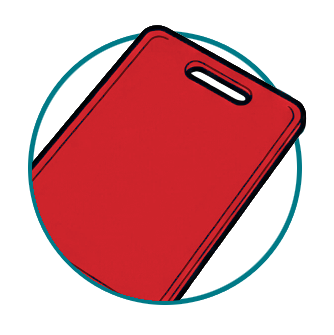
RedRaw meat and poultry
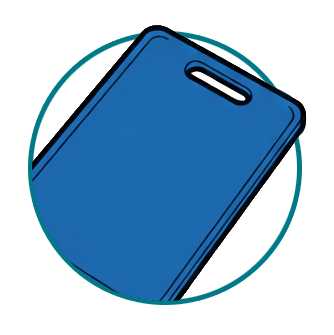
BlueRaw fish and seafood
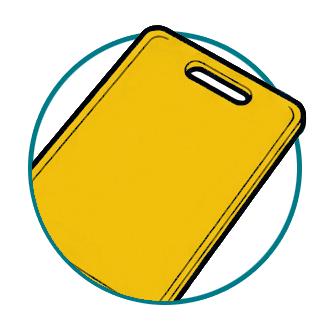
YellowCooked meat
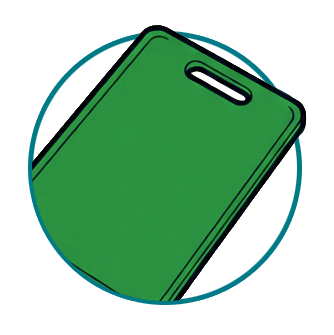
GreenSalad, fruit and herbs
BrownUnwashed and root vegetables
WhiteBakery and dairy
PurpleAllergen-free preparation
The boards fall into two camps. Red, blue and brown carry food that will be cooked, or washed and peeled, before anyone eats it. Yellow, green and white carry food that goes straight onto the plate. Purple sits apart: it protects a customer with a food allergy, where even a trace of the wrong ingredient can cause a serious reaction.
Why separate boards matter
Raw meat, poultry and fish carry bacteria such as Campylobacter, Salmonella and E. coli O157. A board picks them up in seconds and passes them on to whatever is cut on it next. If that next food is chicken going into the oven, cooking deals with them. If it's a cucumber for a salad, or a slice of cooked ham, nothing does. The Food Standards Agency names cross-contamination as one of the most common causes of food poisoning.
UK food law requires businesses to protect food against contamination, and the FSA's Safer Food, Better Business pack asks kitchens to use separate, colour-coded boards and utensils for raw and ready-to-eat food. Its E. coli O157 guidance goes further: equipment used for raw food should not be used for ready-to-eat food unless it can be heat-disinfected, for example in a commercial dishwasher. A quick rinse at the sink is not enough.
A word of honesty: a poster and an activity are awareness and training aids. They make the code visible and easy to teach, but they are not a food safety management system and do not by themselves make your business compliant. Your HACCP-based procedures, cleaning schedule and local authority's expectations still apply. Check current Food Standards Agency guidance if in doubt.
The colour isn't the control
Common misconception
“We've got colour-coded boards, so cross-contamination is sorted.” The board is only one part of it.
A green board cut with the knife that just trimmed raw chicken is no longer a salad board. Nor is one stacked wet against a red board in the rack, or wiped with the same cloth. Colour-code the knives too, or wash and disinfect them between jobs. Store boards upright and apart so they dry. Wash your hands between raw and ready-to-eat tasks, and prep ready-to-eat food first where you can.
Throw out boards that are deeply scored. Bacteria hide in the grooves where cleaning can't reach. And a purple board only protects an allergic customer if the knife, surface, hands and ingredients are clean and checked too.
Test yourself: match the board
Drag each food onto the board you'd use, or tap a food and then tap a board. Then check your answers. Some boards take more than one food.
Match the board
Fourteen foods, seven boards. Which board does each one go on?
Foods to prep
A training aid, not an assessment. Colours follow the code most UK kitchens use; follow your own kitchen's code if it differs.
Where to display the poster
Put the poster where boards are picked up, not in a folder:
Above the board rack, so the code is in sight at the moment a board is chosen.
At each prep bench, especially in a kitchen with separate raw and ready-to-eat areas.
By the pot wash, so boards and knives go back to the right place, clean and dry.
In the induction pack. Give new starters the poster on day one and the activity on this page as a knowledge check.
Laminate copies near sinks and prep surfaces. A soggy poster teaches nothing.
How to get the most from it
Teach the reason, not just the colours. Staff who understand raw versus ready-to-eat can decide about foods the poster doesn't show.
Match knives to boards. Colour-coded knife handles close the most common gap.
Run the activity in team briefings. Five minutes on a phone or the kitchen tablet; aim for 14 out of 14 before service.
Check the rack weekly. Missing colours, scored boards and boards stored wet are all training needs.
Agree your allergen process. Decide who uses the purple board, when, and what else gets cleaned first.
Frequently asked questions
What are the chopping board colours in the UK?
The colour code most UK commercial kitchens use is: red for raw meat and poultry, blue for raw fish and seafood, yellow for cooked meat, green for salad and fruit, brown for vegetables, and white for bakery and dairy. Many kitchens add purple for allergen-free preparation.
Is colour coding chopping boards a legal requirement?
No law sets the colours. The law requires food businesses to protect food from contamination, and Food Standards Agency guidance expects separate equipment for raw and ready-to-eat food. Colour coding is the simplest, most widely recognised way to show which board is which, so it is what an Environmental Health Officer will usually expect to see.
What is a purple chopping board for?
Purple is used for allergen-free preparation, for example making a meal for a customer who has told you about an allergy. A purple board on its own does not make food allergen-free: you also need clean knives, clean hands, a clean surface and ingredients checked against the order.
Can I wash a chopping board and use it for something else?
Not between raw and ready-to-eat food. The Food Standards Agency's E. coli O157 guidance says equipment used for raw food should not be used for ready-to-eat food unless it can be heat-disinfected, for example in a commercial dishwasher. Keep separate boards for raw and ready-to-eat food and clean and disinfect every board between tasks.
Does displaying this resource make my business compliant?
No. The poster and activity are awareness and training aids that help your team pick the right board, but they do not by themselves make your business compliant. You remain responsible for your food safety management system, your HACCP-based procedures and your local authority's expectations. Always check current Food Standards Agency guidance.
Ready to go further than a poster?
The poster shows which board to use; training explains why, covering cross-contamination, cleaning and the system that sets your kitchen's rules. These two EHO-approved courses cover both.
Level 2 · All staff
Level 2 Food Hygiene
Essential food safety for anyone who handles food, including cross-contamination, cleaning and keeping raw and ready-to-eat food apart. Catering, retail, early years, manufacturing and schools versions.
Colour-coded boards are a control in a bigger system. This course explains hazard analysis and critical control points: how a kitchen decides what could go wrong, and which checks stop it.
EHO approved · City & Guilds Assured and CPD certified
Free colour-coded chopping boards poster + a 2-minute match-the-board activity: what each colour is for in a UK commercial kitchen, purple allergen board included. No sign-up: https://www.thesaferfoodgroup.com/colour-coded-chopping-boards-poster.php
About the author
CG
Clare Grantham
Course & Content Writer
Clare is one of our course and content writers, with a wealth of experience in both food safety and education. Early career experience in catering and hospitality (chiefly fish and chip shops!) led Clare to undertake various roles, supporting voluntary organisations to achieve safe processes and 5 star ratings within their catering operations. Alongside a postgraduate qualification in education, and a university staff development role, this experience has enabled Clare to develop quality learning materials and resources that address topics from the food handler and business owner's perspective.

 Red
 Blue
 Yellow
 Green
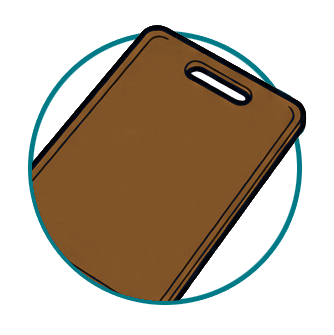 Brown
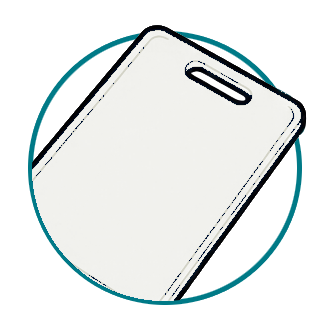 White
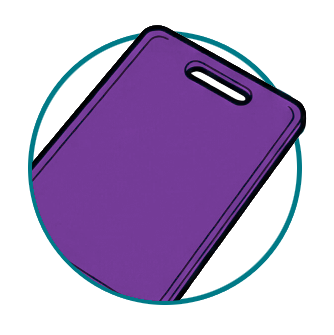 Purple