Food & safety
Food Safety - A key step in your sustainability journey
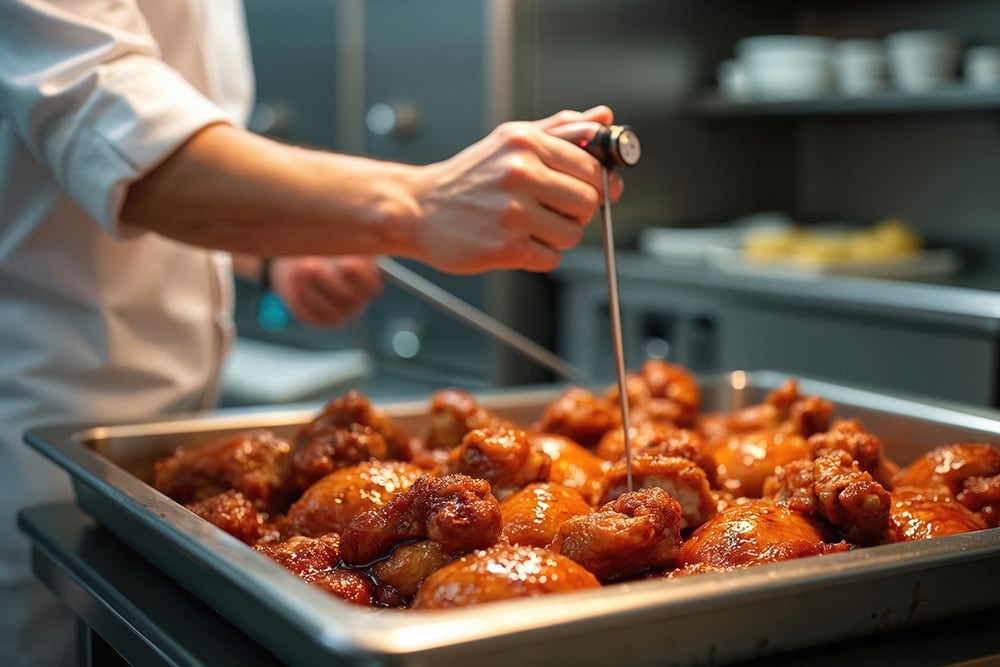


When public sector caterers focus on sustainability, the conversation often centres around meat reduction, organic sourcing, or eliminating single-use plastics. These are vital steps; but the most immediate environmental threat in any high-volume kitchen is food waste. Globally, roughly one-third of all food produced is lost or wasted, contributing heavily to greenhouse gas emissions. For schools, hospitals, and care facilities operating on tightly squeezed budgets, food safety practices act as your primary defence against this waste.
A single food safety failure, whether it’s a broken cold chain on delivery, an incorrectly cooled batch of soup, or a cross-contamination incident, could force a kitchen to discard an entire service's worth of food. When high-volume catering operations throw out food due to poor hygiene or improper storage, they aren't just wasting the budget; they are discarding all the carbon, water, and energy used to produce and transport those ingredients in the first place.
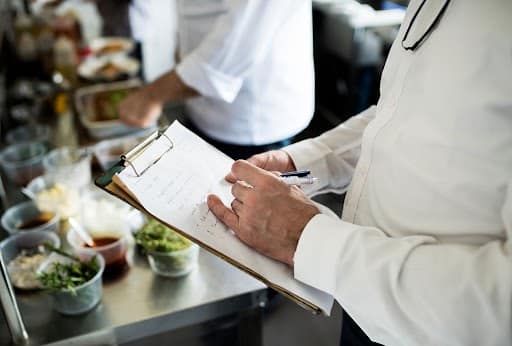
Supplier management is a vital element of your food safety management system. Comprehensive, regular audits of your suppliers are essential, as they allow you to check that they are producing, packing and delivering food safely and that their allergen management is scrupulous. It also allows you to assess their traceability processes - vital in case of a product or ingredient recall - but also a key opportunity to consider sustainability.
Temperature and condition checks are a fundamental food safety action at the goods-in / delivery stage. High-risk food stored within the temperature danger zone (8°C - 63°C) provides the ideal environment for pathogenic growth. Damaged packaging exposes food to potential contamination - biological, chemical, physical and allergenic - so thorough visual checks are also essential. Food waste is bad news wherever it occurs in the supply chain, so choosing reputable suppliers with reliable temperature controlled delivery methods is essential.
A diligent supplier that has proven food safety credentials is also likely to have comprehensive and transparent traceability data that allow you to understand provenance and food miles, production methods and information about animal welfare, ethics and social impact. Including these elements as part of your supplier audit increases the value of your HACCP process, as it can reflect your business' ethics and values in your purchasing decisions. These credentials are also key for participation in initiatives that support and accredit your sustainability efforts, such as the Soil Association's Food For Life Served Here awards. And that is a great story to tell your pupils, patients and customers too.
Commercial food safety processes focus on minimising pathogenic growth, by controlling time, temperature, moisture and access to nutrients. Setting and monitoring critical control points allows a food business to anticipate and identify potential food safety risks before they lead to spoilage and therefore waste. In this way, an operation with high food safety standards is meeting a central tenet of sustainability - treating resources respectfully and minimising waste production.
Most good food safety practices contribute to the reduction of waste. For example - to prepare a large quantity of a high risk food for production, it is good practice to portion into smaller batches and prepare a batch at a time, allowing the rest to remain refrigerated for the maximum possible time. Reduction of time in the temperature danger zone reduces the opportunity for pathogenic growth and therefore possible spoilage and waste. Another example: when operating a buffet, heat small quantities at a time, reducing the possibility of waste when food breaches the hot hold time limit.
Great food safety practices and high ethical standards are likely to go hand-in-hand in food businesses that pay attention to details. A key part of any EHO inspection is assessing 'Confidence in Management'. This element examines how well the leadership team has created a 'food safety culture' - a drive within the whole staff team to do the right thing, whether or not someone is watching. Building a strong team ethic relies on good principles and attention to detail from the top down, underpinning every single kitchen practice.
As well as being an essential element of food safety, managing stock carefully makes good business sense, as better quality ingredients create better food delivered to the customer. A well organised food store, solid pest proofing, clear labelling and date management systems, and separated storage of high-risk and ready-to eat foods are all examples of managing stock safely and responsibly.
In retail, educating the customer on the meaning of best before and use-by dates, and using food surplus apps can be a great way to access new customers, or encourage existing customers to try something new. Good stock management means better quality and less waste - and greater sustainability.
Marrying food hygiene with environmental targets comes down to the daily habits of your kitchen team. By embedding clear food safety principles into your kitchen culture, your sustainability metrics will naturally improve:
FIFO (First In, First Out): Implementing a strict rotation system isn’t just a prerequisite for a flawless EHO inspection; it is excellent resource management. Ensuring older stock is safely used before it spoils dramatically reduces the volume of waste heading to the bins.
Precision Temperature Control: Keeping refrigerators calibrated strictly between 1°C and 5°C doesn’t just stop the growth of dangerous pathogenic bacteria like Listeria—it actively prevents premature food spoilage. A commercial fridge that fluctuates or runs too warm wastes both electricity and the precious shelf-life of your ingredients.
Smart Freezing: Utilising use-by dates dynamically allows teams to freeze seasonal or bulk-purchased ingredients at peak freshness, preserving them legally and safely for future menus instead of letting them spoil in ambient dry stores.
Ultimately, you cannot achieve long-term sustainability goals in catering operations without a properly educated, compliant workforce. When catering staff are trained to view food hygiene not as a rigid, box-ticking exercise, but as a vital tool for preserving precious food resources, daily habits permanently change.
Before investing heavily in complex external environmental audits or expensive green tech, look at your kitchen’s foundational food safety habits. By getting the fundamentals of hygiene, stock control, and temperature management right, you aren't just protecting vulnerable diners from foodborne illnesses - you are taking a massive, measurable step forward on your organisation's sustainability journey.
Want to empower your catering team to run a safer, more sustainable kitchen? Explore our fully accredited online training courses designed to help public sector teams reduce waste, maintain flawless compliance, and achieve maximum efficiency.
Why The Safer Food Group? As a Food for Life Served Here supplier, we are committed to supporting catering teams in their sustainability journey. We're a small, lean, agile company with a carbon footprint to match - providing a flexible, scalable training solution to individual learners, multi-site, large employers and everyone in between. Food safety is our expertise, it's what makes us tick, and we enjoy the challenges presented by all sectors in the food industry.
Courses developed for Schools and Education
Level 2 Food Hygiene for Schools
Allergy Awareness for Schools (non-catering staff)
Courses developed for Hospitals, Health and Care
When public sector caterers focus on sustainability, the conversation often centres around meat reduction, organic sourcing, or eliminating single-use plastics. These are vital steps; but the most immediate environmental threat in any high-volume kitchen is food waste. Globally, roughly one-third of all food produced is lost or wasted, contributing heavily to greenhouse gas emissions. For schools, hospitals, and care facilities operating on tightly squeezed budgets, food safety practices act as your primary defence against this waste.
A single food safety failure, whether it’s a broken cold chain on delivery, an incorrectly cooled batch of soup, or a cross-contamination incident, could force a kitchen to discard an entire service's worth of food. When high-volume catering operations throw out food due to poor hygiene or improper storage, they aren't just wasting the budget; they are discarding all the carbon, water, and energy used to produce and transport those ingredients in the first place.
Supplier management is a vital element of your food safety management system. Comprehensive, regular audits of your suppliers are essential, as they allow you to check that they are producing, packing and delivering food safely and that their allergen management is scrupulous. It also allows you to assess their traceability processes - vital in case of a product or ingredient recall - but also a key opportunity to consider sustainability.
Temperature and condition checks are a fundamental food safety action at the goods-in / delivery stage. High-risk food stored within the temperature danger zone (8°C - 63°C) provides the ideal environment for pathogenic growth. Damaged packaging exposes food to potential contamination - biological, chemical, physical and allergenic - so thorough visual checks are also essential. Food waste is bad news wherever it occurs in the supply chain, so choosing reputable suppliers with reliable temperature controlled delivery methods is essential.
A diligent supplier that has proven food safety credentials is also likely to have comprehensive and transparent traceability data that allow you to understand provenance and food miles, production methods and information about animal welfare, ethics and social impact. Including these elements as part of your supplier audit increases the value of your HACCP process, as it can reflect your business' ethics and values in your purchasing decisions. These credentials are also key for participation in initiatives that support and accredit your sustainability efforts, such as the Soil Association's Food For Life Served Here awards. And that is a great story to tell your pupils, patients and customers too.
Commercial food safety processes focus on minimising pathogenic growth, by controlling time, temperature, moisture and access to nutrients. Setting and monitoring critical control points allows a food business to anticipate and identify potential food safety risks before they lead to spoilage and therefore waste. In this way, an operation with high food safety standards is meeting a central tenet of sustainability - treating resources respectfully and minimising waste production.
Most good food safety practices contribute to the reduction of waste. For example - to prepare a large quantity of a high risk food for production, it is good practice to portion into smaller batches and prepare a batch at a time, allowing the rest to remain refrigerated for the maximum possible time. Reduction of time in the temperature danger zone reduces the opportunity for pathogenic growth and therefore possible spoilage and waste. Another example: when operating a buffet, heat small quantities at a time, reducing the possibility of waste when food breaches the hot hold time limit.
Great food safety practices and high ethical standards are likely to go hand-in-hand in food businesses that pay attention to details. A key part of any EHO inspection is assessing 'Confidence in Management'. This element examines how well the leadership team has created a 'food safety culture' - a drive within the whole staff team to do the right thing, whether or not someone is watching. Building a strong team ethic relies on good principles and attention to detail from the top down, underpinning every single kitchen practice.
As well as being an essential element of food safety, managing stock carefully makes good business sense, as better quality ingredients create better food delivered to the customer. A well organised food store, solid pest proofing, clear labelling and date management systems, and separated storage of high-risk and ready-to eat foods are all examples of managing stock safely and responsibly.
In retail, educating the customer on the meaning of best before and use-by dates, and using food surplus apps can be a great way to access new customers, or encourage existing customers to try something new. Good stock management means better quality and less waste - and greater sustainability.
Marrying food hygiene with environmental targets comes down to the daily habits of your kitchen team. By embedding clear food safety principles into your kitchen culture, your sustainability metrics will naturally improve:
FIFO (First In, First Out): Implementing a strict rotation system isn’t just a prerequisite for a flawless EHO inspection; it is excellent resource management. Ensuring older stock is safely used before it spoils dramatically reduces the volume of waste heading to the bins.
Precision Temperature Control: Keeping refrigerators calibrated strictly between 1°C and 5°C doesn’t just stop the growth of dangerous pathogenic bacteria like Listeria—it actively prevents premature food spoilage. A commercial fridge that fluctuates or runs too warm wastes both electricity and the precious shelf-life of your ingredients.
Smart Freezing: Utilising use-by dates dynamically allows teams to freeze seasonal or bulk-purchased ingredients at peak freshness, preserving them legally and safely for future menus instead of letting them spoil in ambient dry stores.
Ultimately, you cannot achieve long-term sustainability goals in catering operations without a properly educated, compliant workforce. When catering staff are trained to view food hygiene not as a rigid, box-ticking exercise, but as a vital tool for preserving precious food resources, daily habits permanently change.
Before investing heavily in complex external environmental audits or expensive green tech, look at your kitchen’s foundational food safety habits. By getting the fundamentals of hygiene, stock control, and temperature management right, you aren't just protecting vulnerable diners from foodborne illnesses - you are taking a massive, measurable step forward on your organisation's sustainability journey.
Want to empower your catering team to run a safer, more sustainable kitchen? Explore our fully accredited online training courses designed to help public sector teams reduce waste, maintain flawless compliance, and achieve maximum efficiency.
Why The Safer Food Group? As a Food for Life Served Here supplier, we are committed to supporting catering teams in their sustainability journey. We're a small, lean, agile company with a carbon footprint to match - providing a flexible, scalable training solution to individual learners, multi-site, large employers and everyone in between. Food safety is our expertise, it's what makes us tick, and we enjoy the challenges presented by all sectors in the food industry.
Courses developed for Schools and Education
Level 2 Food Hygiene for Schools
Allergy Awareness for Schools (non-catering staff)
Courses developed for Hospitals, Health and Care
Join 950,000+ learners
Explore our award winning online video based training

The Safer Food Group
Unit 2, Integrity House,
Lower Lumsdale, Matlock
DE4 5EX

Back
to top
© The Safer Food Group 2026 | Privacy policy