
This Understanding Listeria course introduces staff working in care and healthcare settings to the essential knowledge required to prevent Listeria contamination and protect vulnerable people. It explains how Listeria behaves, how outbreaks occur, and why routine daily tasks such as temperature checking, cleaning, and safe food handling are critical. Learners explore environmental risks within a premises, food-based risks, and their own responsibilities in supporting safe practice. The final module supports learners in reflecting on their own workplace behaviours through a practical self-assessment checklist.
Developed with food safety specialists and NHS partners, this fully online course teaches practical controls for preventing the contamination and spread of Listeria, both through food and within the wider health and care environments. It aligns with FSA expectations for managing Listeria in care homes and hospitals, including environmental controls, chilled food management, and prevention of cross-contamination.
Fully accredited by City & Guilds and CPD UK, this training leads to an instant certificate. It is suitable for kitchen staff, front-line care staff, cleaning teams, and anyone involved in receiving, storing, preparing, serving, or handling food within care or healthcare settings.
Course Level: Introductory Reference: ALA2CGA26 Accreditations: City & Guilds, CPD Certificate: Instant PDF download
Get your Listeria training today
What you'll learn
-
 What Listeria is, how it behaves, who is most at risk, and how real UK outbreaks have occurred
-
How Listeria survives and spreads in a healthcare or care setting and how to control it
-
High-risk foods that encourage Listeria growth and the safety measures required to prevent it
-
Individual responsibility in tackling Listeria risk, including the importance of consistency and diligence in following cleaning routines
-
How to respond appropriately to issues such as temperature failures, damaged equipment, or missed cleaning steps
Who should take this course
This Understanding Listeria in Care and Healthcare course is designed for anyone working in care or healthcare setting, including those where food is provided. It is suitable for:
- Food handlers
- Catering assistants and servery teams
- Front-line care staff
- Healthcare and care assistants
- Cleaning and maintenance teams
Course overview
This unit is designed for staff working in frontline roles in care and healthcare environments where vulnerable people may be exposed to Listeria. It supports learners in understanding the importance of safe practice, the behaviours that prevent outbreaks, and the controls already in place within their organisation.
The content reinforces practical, everyday actions such as cleaning, temperature checking, safe food handling, and prompt reporting of issues. It prepares learners to recognise common risks and follow safe routines confidently.
This chapter explains what Listeria is, how it behaves, who is most at risk, and how real UK outbreaks have occurred. Learners gain a clear understanding of why Listeria is a significant concern in care and healthcare settings.
This chapter focuses on the building and equipment. It explores how Listeria survives in damp or damaged areas, how it spreads around premises, and how biofilms develop. Learners examine environmental weaknesses that allow Listeria to establish itself and how these risks are controlled.
This chapter covers food-related risks, including high-risk ready-to-eat foods, temperature control, safe storage, hand hygiene, and preventing cross-contamination. Learners see how everyday food-handling routines support Listeria prevention.
This chapter sets out the learner’s personal responsibilities. It explains how organisational processes work, why approved routines must be followed consistently, and how to respond appropriately to issues such as temperature failures, damaged equipment, or missed cleaning steps.
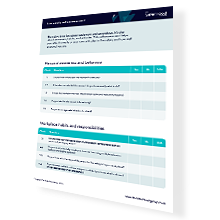
This final chapter allows learners to reflect on their own practice through a role-focused self-assessment checklist. Learners review how they apply safe routines in their daily work and identify where further improvement may be needed. This chapter supports learning and reflection and is not formally assess.
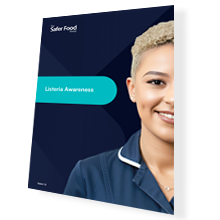
Course handbook, front-line care staff self-assessment, cleaning staff self-assessment and kitchen staff self-assessment.
Do I have to do any other courses first?
There are no entry requirements for this course, although having a good foundation in food safety knowledge is helpful and can be gained through experience in your role or by completing Level 2 Food Safety training.
Course features
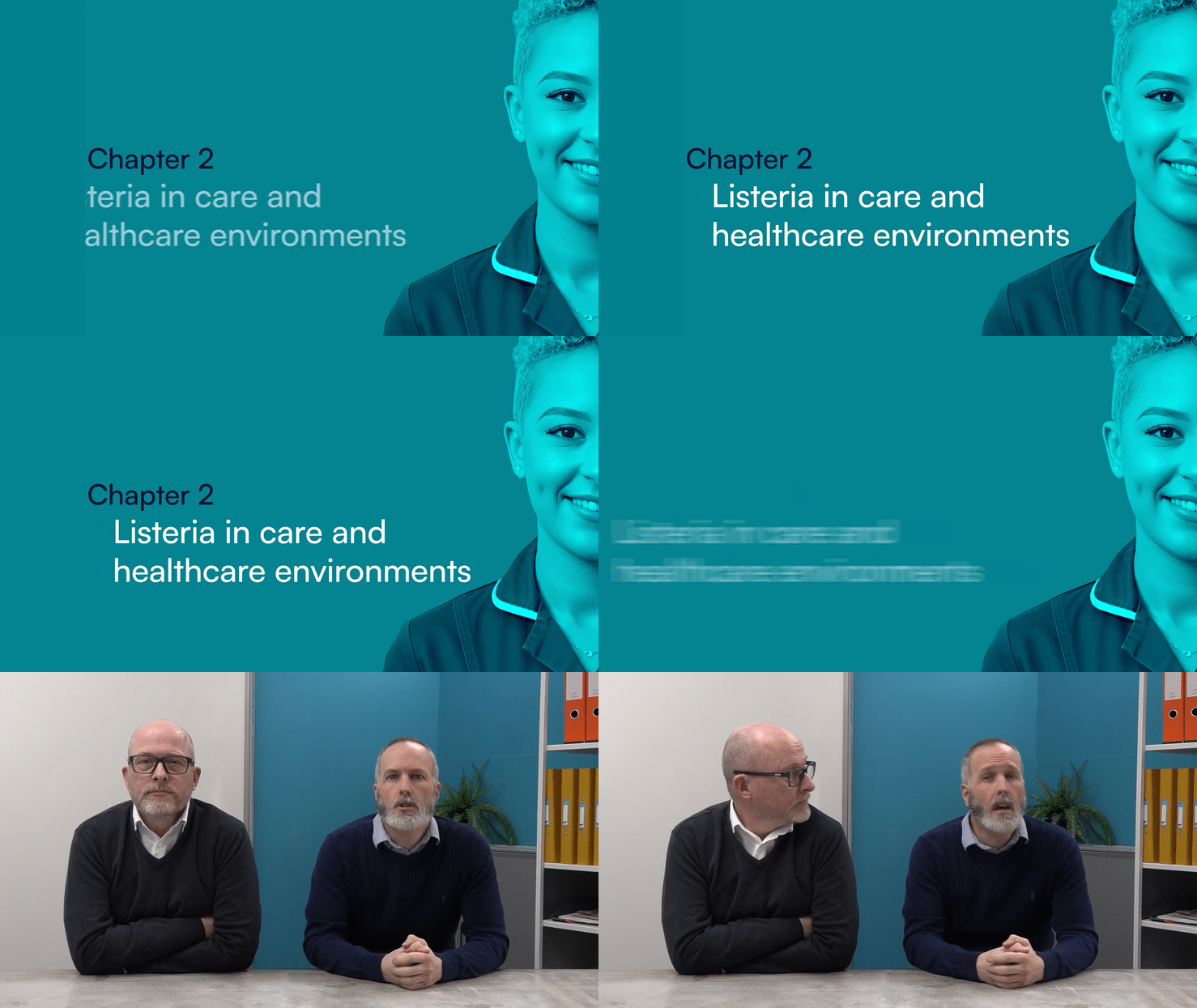
Try our sample chapter - Listeria in care and healthcare environments
Frequently asked questions
Individual learners have 30 days from registration to complete the course and final assessment. Business buyers have 12 months to allocate course codes, with each learner receiving 30 days of access from activation. Extensions can usually be arranged on request.
Most learners complete the course in two to four hours, depending on experience. A minimum study period applies before the exam unlocks to support understanding.
You’ll receive unlimited free exam retakes. The exam has 20 multiple-choice questions and the pass mark is 16 out of 20. If you don’t pass on the first attempt, you’ll receive guidance on which topics to review.
Service users and patients within health and care settings can be especially vulnerable to serious harm in the case of Listeria outbreaks. Recent incidents have highlighted the need for extra awareness in relation to this pathogen and this course addresses those real and current needs.
We recommend that training is renewed every three years, although some employers or local authorities may request training more frequently.
Food hygiene focuses on general food safety practices. This Understanding Listeria course addresses the specific dangers posed by the pathogen, particularly in relation to vulnerable people and is relevant to both food handlers and non food-handling staff alike.
Our awarding bodies
Quality assurance is an important part of Safer Food Group training. We use external experts to review and accredit our courses for academic rigour, fit for purpose, accuracy and currency. This means that you can trust The Safer Food Group to deliver high quality, effective training.

Measured against their global benchmark, City & Guilds validates how The Safer Food Group's plans, designs, maintains and evaluates training programmes. City & Guilds is a trusted academic leader sought by learners, educators, and employers around the world.
All SFG courses carry CPD credits. This means that CPD UK has verified SFG training is of suitable quality and content to count towards Continued Professional Development.