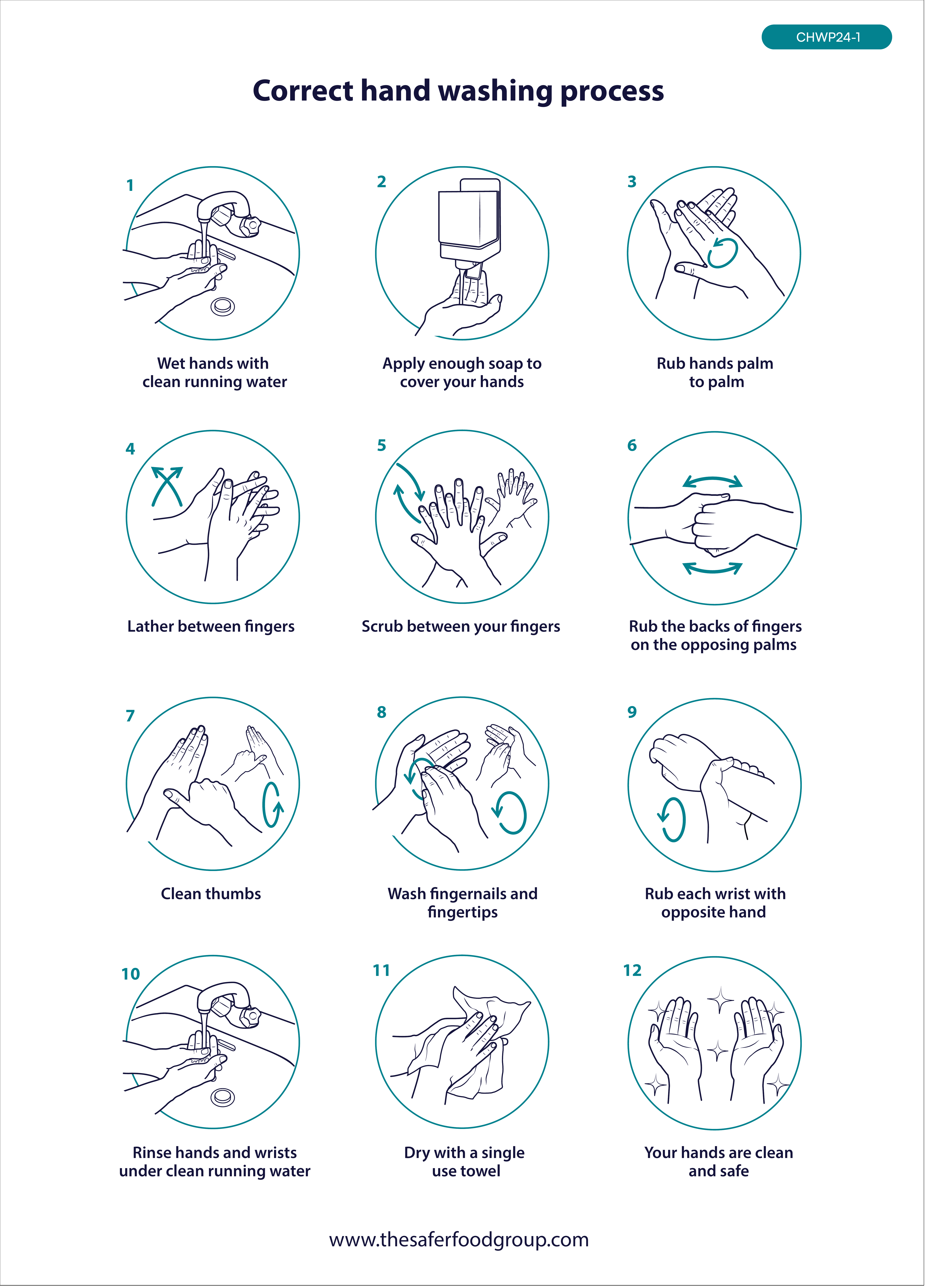
This is a free, print-ready poster that walks staff through the correct hand washing process, one step at a time. It turns the technique into something people can glance at and follow while they're actually at the sink - far more effective than a line in a handbook nobody reopens.
The poster covers the full sequence: wet your hands with clean running water; apply enough soap to cover them; rub palm to palm; lather between the fingers; rub the backs of the fingers against the opposing palms; clean each thumb; scrub the fingernails and fingertips; rub each wrist; rinse hands and wrists under clean running water; and dry with a single-use towel. Done properly, those steps take around 20 seconds and leave hands clean and safe.
Why it matters
Hands are one of the most common ways harmful bacteria move around a kitchen - from raw meat to ready-to-eat food, from the bin to the chopping board. Effective hand washing is one of the simplest and most effective controls a food business has, which is exactly why EHOs look for it being done well.
Food hygiene law (Regulation (EC) 852/2004, which continues to apply in the UK) requires every person working in a food-handling area to maintain a high degree of personal cleanliness. The Food Standards Agency is clear that all staff who work with food must wash their hands, and should dry them on a disposable towel because bacteria spread more easily from wet or damp hands.
Important to note: a poster on the wall is a training and awareness aid, not compliance on its own. It supports good practice, but compliance comes from trained staff, a properly stocked hand-wash basin, supervision, and a well maintained food safety management system. Treat the poster as a reminder that keeps the standard visible - not as a box ticked.
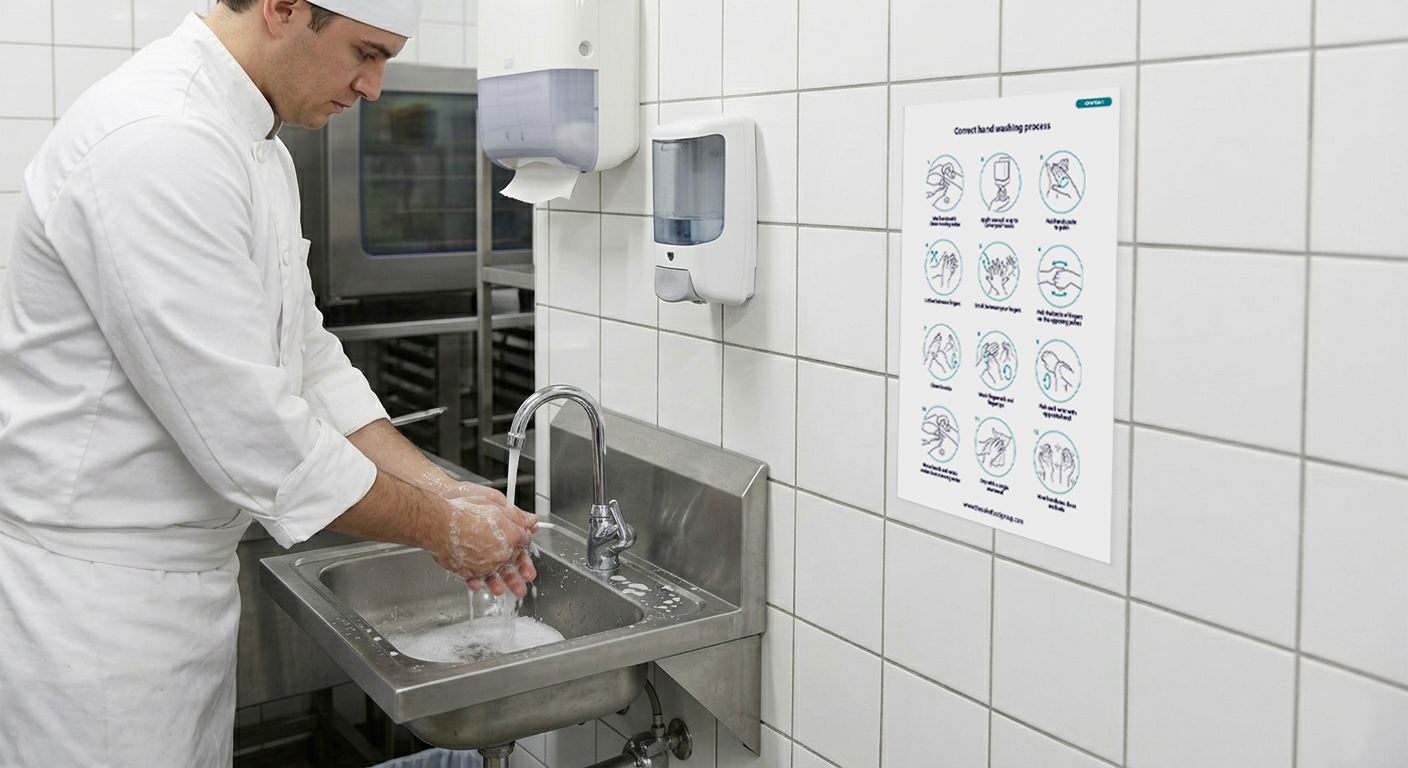
The correct hand washing process in action at a dedicated hand-wash sink, with soap and single-use towels to hand.
Self-audit: are you washing well enough?
Two things make hand washing work - doing it often enough, and doing it well. A perfect technique only performed twice a shift won't protect anyone, and frequent washing that skips the thumbs and fingertips misses where bacteria hide. Use this self audit to reflect on your own hand washing routine and your team's. Tick only the boxes that are reliably true - not "most of the time", but every time.
1. Is it done often enough?
Tick each moment your team washes hands without fail.
2. Is it done correctly?
Tick what's true of how hands are washed and the facilities available.
How often 0/8
How well 0/8
0 of 16 in placeTick the boxes that are reliably true for your kitchen to see where you stand.
A self-assessment aid to spot gaps in your own practices - it is not a formal audit or compliance record.
Where to display it
Put it where people wash their hands and where they're reminded to. The poster works best at the point of action:
Above every hand-wash sink - at eye level, where staff read it while washing.
In staff toilets and changing areas - the place hand washing is most often skipped.
At kitchen entry points - so it's the first thing seen when coming on shift.
Near raw-food prep stations - a prompt to wash after handling raw meat, poultry or eggs.
In food prep areas in care, schools and early years settings - wherever non-specialist staff handle food.
One caution: a designated hand-wash basin should be used only for washing hands - never for preparing food or washing equipment. Make sure each one is stocked with soap and single-use towels so staff can actually follow the steps.
How to get the most from it
Print in colour. The coloured images are easier to follow at a glance than names alone.
Laminate it. Sinks are wet places - laminating keeps it clean and lets you wipe it down.
Size up where you can. A3 reads from across the room; A4 is fine right at the sink.
Pair it with training. The poster reminds; a Level 1 or Level 2 course teaches the why and when behind it.
Use it for inductions. Walk new starters through the steps at the sink on day one.
Keep it current. Replace faded or grubby copies - a tatty poster sends the wrong message to staff and EHOs alike.
Following the steps at the sink - the technique put into practice during a shift.
Frequently asked questions
When should food handlers wash their hands?
Wash your hands on entering the kitchen and before handling food; before handling ready-to-eat food; after handling raw meat, poultry, eggs or unwashed vegetables; after using the toilet; after touching the bin, your face, hair or a phone; and after cleaning, eating, smoking, or coughing and sneezing. When in doubt, wash.
How long should you wash your hands for?
Aim for around 20 seconds of thorough washing with soap and warm running water, working through every stage on the poster, then dry with a single-use towel. Damp hands spread bacteria more easily, so drying properly matters as much as washing.
Does displaying this poster make my business compliant?
No. The poster is an awareness and training aid, not compliance in itself. UK food hygiene law requires food handlers to maintain a high degree of personal cleanliness, but compliance comes from trained staff, a designated hand-wash basin stocked with soap and single-use towels, supervision, and your documented food safety management system. The poster supports those things; it does not replace them.
Where should the hand washing poster be displayed?
Put it at eye level above or beside every designated hand-wash sink, in staff toilets and changing areas, and near kitchen entry points. Hand-wash sinks should be used only for washing hands — not for preparing food or washing equipment.
Ready to go further than a poster?
A poster keeps the technique visible; accredited training teaches staff the why and when behind it. These two courses are EHO approved, City & Guilds and CPD accredited, and online with an instant certificate.
Level 2 · Food handlers
Level 2 Food Hygiene Certificate
The core course for anyone who prepares or handles open food. Covers personal hygiene and hand washing in depth, alongside cross-contamination, cleaning and temperature control.
Catering, Early years, Retail, Manufacturing and Schools versions
2-4 hours · 6 CPD points · instant PDF certificate
An introductory course for staff who work around food but don't prepare it - delivery, retail, front of house and support roles. Covers personal hygiene, hand washing and contamination basics.
Ideal for induction and low-risk roles
2-4 hours · 3 CPD points · instant PDF certificate
Free correct hand washing poster for kitchens - print it and put it by every sink. No sign-up: https://www.thesaferfoodgroup.com/hand-washing-poster.php
About the author
PG
Paul Grantham
Food Safety Trainer, Educator & Consultant
Paul is a food safety trainer, educator and consultant with over 15 years' experience helping food businesses work safely. He lectures at university level and spent decades working across the hospitality and retail sectors before moving into training, giving him a practical, floor-level understanding of the pressures real kitchens and food businesses face. Much of his consultancy work centres on food safety auditing and management system design, and he has worked with everyone from independent operators to large-scale, multi-site organisations across a wide range of sectors. That blend of hands-on industry experience, academic teaching and system-level expertise shapes resources and training that make sense to food handlers and business owners alike.